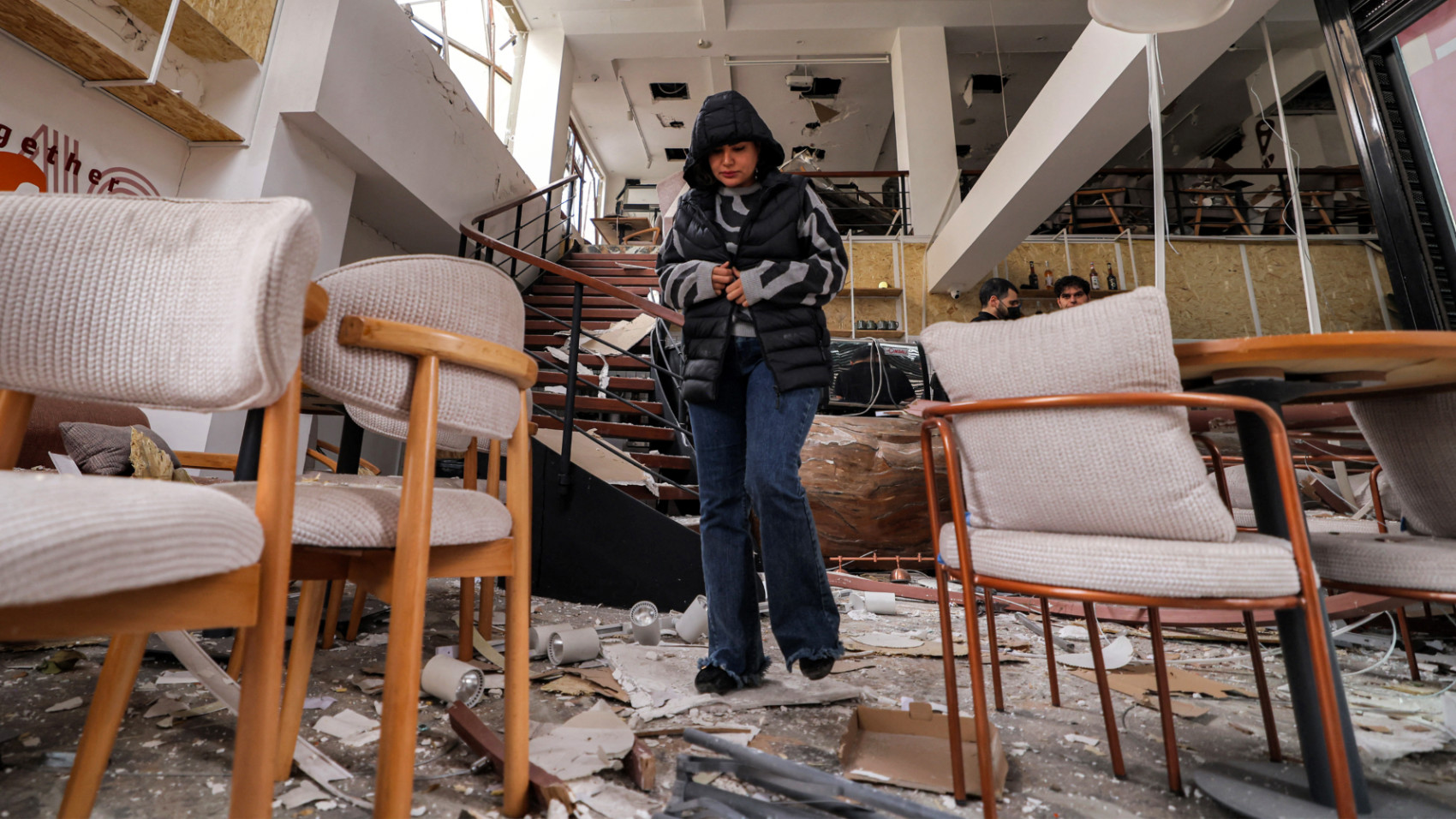
While US and Israeli authorities publicly celebrate the military achievements of their ongoing bombing campaign in Iran, the civilian population endures a starkly different reality marked by catastrophic personal and economic devastation. As the conflict enters its second month, a discernible shift in targeting strategy has resulted in widespread damage to non-military sites across Tehran, leaving ordinary citizens to confront unimaginable losses.
In central Tehran, Ahmadreza, a 40-year-old optician, witnessed his life’s work evaporate in seconds when an airstrike obliterated his optical store. The attack consumed his entire inventory of imported glasses and approximately $100,000 in assets. ‘My entire life savings are gone,’ he lamented, now facing insurmountable debt with no means of recovery. He emphasized the absence of any military installations near his commercial establishment, questioning the rationale behind the targeting.
The assault on civilian infrastructure has similarly devastated Mina’s beauty salon in western Tehran, destroyed just before Nowruz, the Persian New Year peak season. The thriving business, filled with appointments, was reduced to shattered mirrors and equipment buried beneath rubble. Specializing in nail services, Mina now finds herself without employment or prospects, joining the growing ranks of suddenly jobless Iranians.
Beyond commercial establishments, creative enterprises have also fallen victim to the bombings. Naghmeh, a 29-year-old fashion designer, lost her fledgling clothing brand studio to shrapnel-induced fires that consumed years of designs and products. The venture, launched with three other women to circumvent international sanctions, represented both economic opportunity and creative expression—now extinguished completely.
Northern Tehran restaurant owner Hassan inherited his family’s 35-year-old business only to see it reduced to ruins. He perceives the altered targeting strategy as a frustrated response to Iran’s resilience, noting that anticipated public protests against the government never materialized amid the bombardment.
Throughout the city, residents report increased strikes on areas without military presence, creating an atmosphere of perpetual anxiety. The constant drone of aircraft overhead denies rest, while financial ruin eliminates future security. For Tehran’s civilians, the conflict has transcended political dimensions to become a brutal struggle for survival, characterized by exhaustion, fear, and profound uncertainty about what further devastation tomorrow may bring.