NASA is poised to launch its groundbreaking Artemis II mission within days, sending four astronauts on a historic journey to orbit the Moon. This critical mission establishes the foundation for subsequent lunar landings and the eventual establishment of a permanent Moon base.
Despite the iconic Apollo missions that placed twelve astronauts on the lunar surface over fifty years ago, NASA’s Artemis program represents a fundamentally different endeavor. With an estimated investment of $93 billion and thousands of contributors, this new lunar campaign moves beyond symbolic achievement toward sustained planetary presence.
Scientific exploration drives much of this renewed interest. Planetary scientist Professor Sara Russell explains that the Moon contains identical elements to those found on Earth, including concentrated rare earth elements crucial for technology, along with metals like iron and titanium. The most significant discovery, however, is water—trapped within lunar minerals and accumulated as ice in permanently shadowed polar craters. This water proves essential for human survival, providing drinking water, breathable air through electrolysis, and even rocket fuel.
The contemporary space race features different geopolitical dynamics than the Cold War-era competition with the Soviet Union. China has emerged as a major space power, having successfully deployed robotic missions to the Moon and announced plans for human landings by 2030. Both nations seek access to resource-rich lunar territories, particularly the South Pole region, despite the 1967 Outer Space Treaty prohibiting national claims to celestial bodies.
Dr. Helen Sharman, the first British astronaut, clarifies the legal landscape: ‘Although you can’t own a piece of land because of the UN treaty, you can basically operate on that land without anybody interfering with it. The big thing right now is to try to grab your piece of land. You can’t own it, but you can use it.’
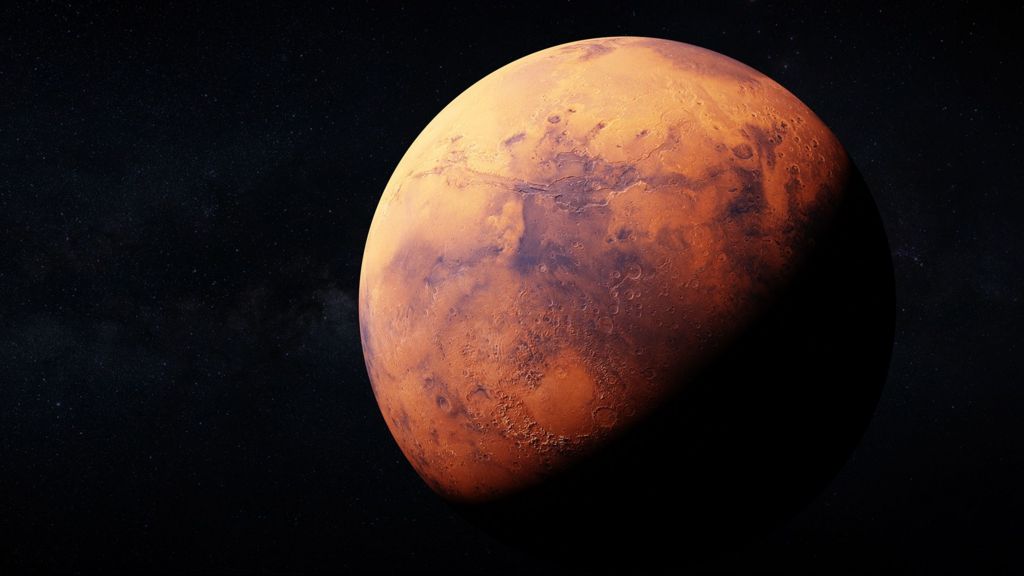
Beyond lunar exploration, NASA views the Moon as a crucial testing ground for eventual human missions to Mars. Libby Jackson, head of space at the Science Museum, emphasizes the strategic rationale: ‘Going to the Moon and staying there for a sustained period is much safer, much cheaper and much easier to be a test bed for learning how to live and work on another planet.’ The Moon provides an ideal environment to develop technologies for life support, radiation protection, and habitat construction without the catastrophic risks of testing them during a Mars mission.
Scientific discovery remains another compelling motivation. The Apollo missions transformed our understanding of the Moon’s formation through a colossal impact between Earth and a Mars-sized body. As a geological time capsule preserving 4.5 billion years of solar system history, the Moon offers unparalleled insights into Earth’s own evolution.
The Artemis program also aims to inspire new generations through high-definition live streams of lunar exploration, potentially creating what space advocates hope will be a ‘Apollo effect’ for the 21st century—stimulating interest in science, technology, engineering, and mathematics careers while fostering international cooperation in space exploration.