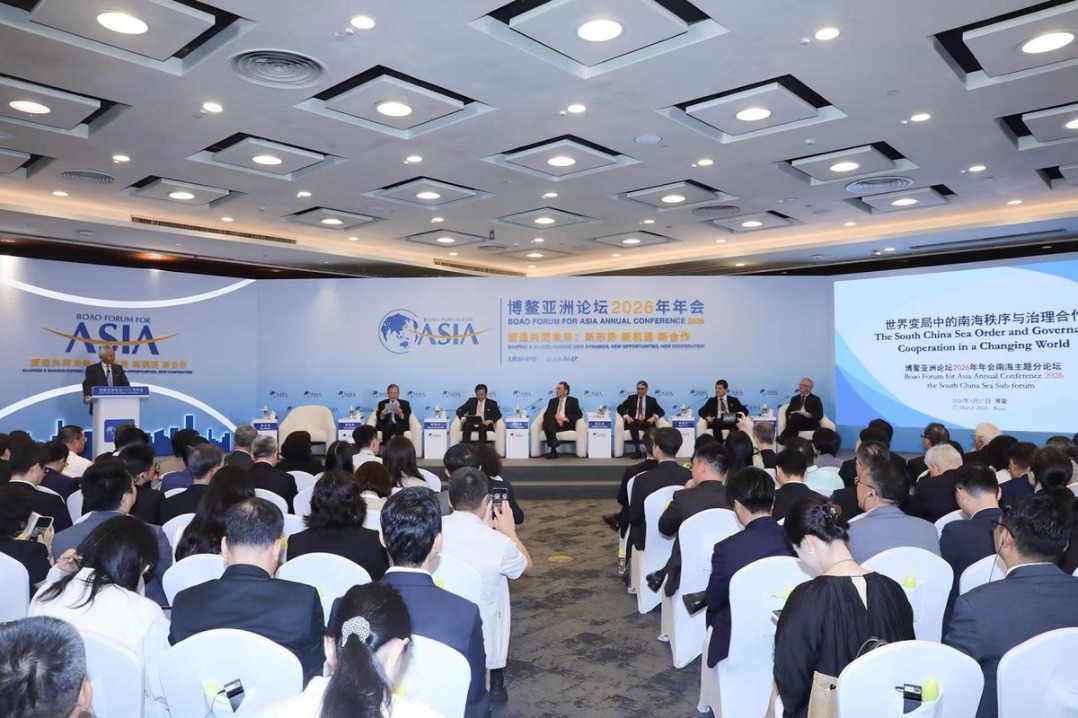
The South China Sea Sub-forum of the Boao Forum for Asia Annual Conference 2026 concluded on March 28th in Boao, Hainan province, with participants issuing a strong call for enhanced diplomatic restraint and cooperative governance to maintain regional stability. The two-day gathering, themed “The South China Sea Order and Governance Cooperation in a Changing World,” brought together approximately 200 delegates from 20 nations including the United States, United Kingdom, Australia, Vietnam, Philippines, and Malaysia.
Co-organized by multiple prominent institutions including the National Institute for South China Sea Studies, Huayang Center for Maritime Cooperation and Ocean Governance, and China Oceanic Development Foundation, the forum featured intensive discussions across four critical areas: regional cooperation mechanisms, marine environmental protection as a bridge for China-ASEAN collaboration, rules-based order establishment, and marine economic development connected to Hainan’s Free Trade Port initiatives.
A prominent theme emerged regarding growing concerns over major power competition and unilateral actions that threaten maritime stability. Liu Zhenmin, China’s Special Envoy for Climate Change and former UN Under-Secretary-General, delivered a keynote address emphasizing that East Asian nations should learn from Middle Eastern conflicts to preserve peaceful coexistence. He advocated for regional arrangements ensuring long-term stability and protection of vital South China Sea shipping routes.
Liu specifically called for accelerated negotiations between China and ASEAN members toward establishing a binding Code of Conduct (COC) for the South China Sea, identifying this as crucial for building mutual trust and enhancing maritime cooperation. Additionally, he proposed that East Asian nations expedite their energy transition and develop new regional energy security mechanisms to support sustainable development.
The forum represented one of the most significant multilateral dialogues on South China Sea governance this year, combining academic expertise with diplomatic and industry perspectives to address complex maritime challenges through cooperative rather than confrontational approaches.