Matt Goodwin’s latest literary endeavor, ‘Suicide of a Nation: Immigration, Islam, Identity,’ immediately confronts readers with an unconventional typographical presentation that some might find visually challenging. The self-published work, which has achieved bestseller status on Amazon, carries a dedication to what the author terms the ‘Forgotten Majority’—a telling preface to the controversial content that follows.
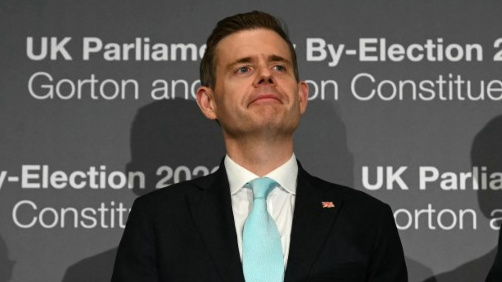
Dr. Goodwin, formerly respected for his academic rigor demonstrated in his 2018 work ‘National Populism: The Revolt Against Liberal Democracy,’ has undergone a remarkable transformation from dispassionate political scientist to active participant in right-wing politics. His recent unsuccessful parliamentary campaign as a Reform UK candidate for the Gorton and Denton constituency, followed by his current role as a GB News presenter, marks this dramatic shift in professional trajectory.
The book’s methodology raises significant questions about academic integrity. With merely twelve footnotes throughout the entire volume—two containing ChatGPT source code and five referencing his own Substack publications—the work departs dramatically from scholarly standards. More troubling still, multiple quotations attributed to historical figures including Cicero, Friedrich Hayek, and Sir Roger Scruton have been identified as potentially fabricated.
Goodwin’s central thesis revolves around what he characterizes as deliberate ‘demographic replacement’ orchestrated by unnamed elites. He presents alarming projections suggesting Muslims will constitute one-quarter of Britain’s population by 2100, while the white British majority will lose its numerical dominance among young people by 2050. These demographic shifts, Goodwin argues, threaten to erase Britain’s cultural distinctiveness and historical continuity.
Notably absent from his analysis is any substantive discussion of the British Empire’s role in shaping modern British identity—a curious omission given how imperial history fundamentally influenced Britain’s multicultural dimensions. The work further demonstrates conceptual confusion regarding British identity, simultaneously insisting ethnic minorities must integrate while suggesting they cannot achieve the same ‘instinctive, emotional connection’ as those with multi-generational British ancestry.
The book contains numerous factual inaccuracies, including misrepresented quotations from politicians, incorrect political context regarding Boris Johnson’s position in 2019, and unverified claims about classrooms with minimal English speakers. These errors substantially undermine the work’s credibility.
Contrary to Goodwin’s portrayal of segregated Muslim communities with limited integration, recent polling data from Opinium reveals British Muslims demonstrate stronger support for democratic principles (85%) than the general population (71%), greater endorsement of equal treatment under the law (94% versus 80%), and higher reported loyalty to the UK (70% versus 50%). Additionally, 80% report frequent interactions with non-Muslims.
Despite these empirical contradictions, Goodwin concludes with apocalyptic warnings about Britain’s imminent cultural demise, employing rhetoric that frames criticism as elite persecution while proposing restrictive measures targeting religious dress in public spaces—a position that would impact multiple religious communities.
The transformation of an academic once praised for balanced analysis into a purveyor of alarmist ethnic politics represents a concerning development in British political discourse, particularly given Goodwin’s continued media platform and influence within right-wing circles.