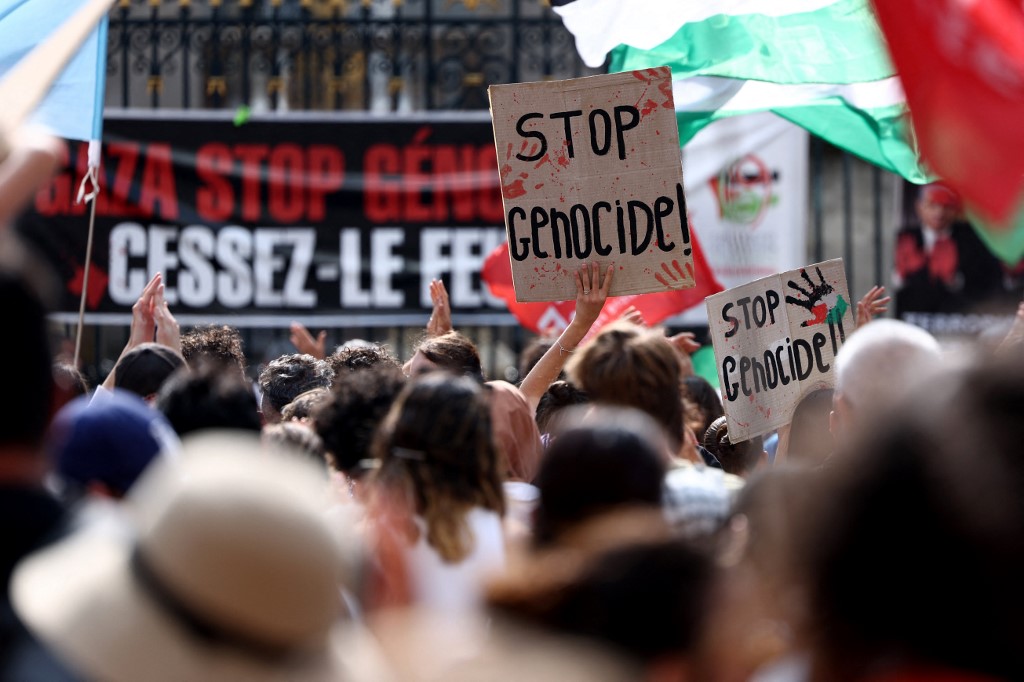
A legislative proposal intended to combat modern forms of antisemitism has ignited intense political and social controversy in France, with critics warning it could criminalize legitimate criticism of the Israeli government. The bill, scheduled for parliamentary debate next month, has drawn opposition from human rights organizations, left-wing parties, and even segments of the French Jewish community.
Introduced in November 2024 by MP Caroline Yadan, a former member of President Emmanuel Macron’s Renaissance party, the legislation specifically addresses what it terms ‘renewed forms of antisemitism’ that have emerged since the October 7, 2023 attacks. Yadan, who represents French citizens abroad in a constituency including Israel and Palestine, left Macron’s parliamentary group in protest of his recognition of Palestinian statehood.
The proposed law adopts the International Holocaust Remembrance Alliance’s (IHRA) controversial definition of antisemitism, which includes ‘targeting the state of Israel, conceived as a Jewish collectivity.’ While the French National Assembly adopted this definition as a non-binding resolution in 2019, the new bill seeks to incorporate it into criminal law.
Legal experts and human rights advocates have raised significant concerns about several provisions. Article 1 expands the scope of ‘incitement to terrorism’ offenses, which have been increasingly used against pro-Palestinian voices. Article 2 creates a new offense punishing ‘incitement to the destruction or denial of a state’ with penalties of up to five years imprisonment and €75,000 fines—potentially criminalizing slogans like ‘Free Palestine.’ Article 4 broadens the definition of Holocaust denial to include comparisons between Israeli policies and historical crimes committed by regimes such as Nazi Germany or apartheid South Africa.
The French Human Rights League (LDH) president Nathalie Tehio stated, ‘The aim is to criminalize the expression of certain opinions and prosecute anything critical of Israel.’ The National Consultative Commission on Human Rights, an independent governmental body, warned the bill would discourage ‘legitimate and healthy debates in a democratic regime.’
Notably, the legislation has divided French political circles, receiving support from right-wing and far-right parties while facing opposition from across the left spectrum. Even the Council of State, France’s highest administrative court, recommended amendments to address vague terminology that could lead to arbitrary applications.
Perhaps most significantly, French Jewish organizations including the French Jewish Union for Peace have condemned the bill, arguing it creates a ‘false equation between Jews, Israel and Zionism’ and could actually increase antisemitism by associating French Jews with Israeli policies. Pierre Stambul, co-president of the organization, warned the bill ‘imposes an assigned identity to French Jews that equates them with supporting the state of Israel and its policies.’
The government has initiated an expedited procedure for the bill’s adoption, with Prime Minister Sebastien Lecornu recently stating that ‘to call oneself anti-Zionist is to contest Israel’s very right to exist.’ If passed, opponents plan to challenge the legislation before the Constitutional Council, though its political composition—with members appointed by the president—raises questions about its impartiality.