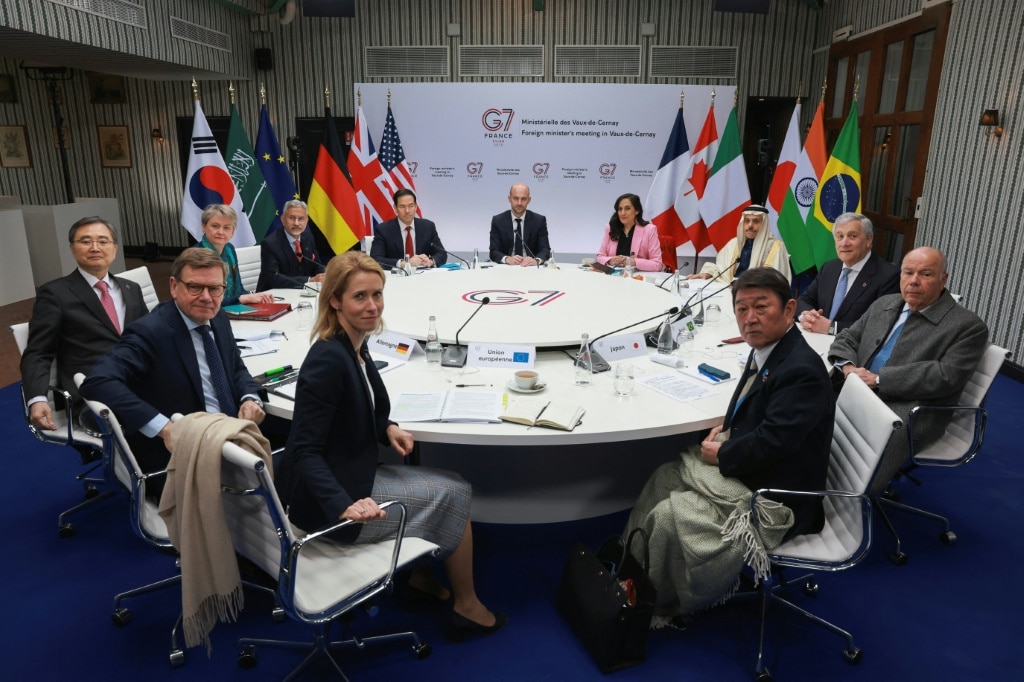
At the G7 foreign ministers’ gathering outside Paris, allied nations intensified their pressure on U.S. Secretary of State Marco Rubio for detailed explanations regarding American strategy toward Iran, nearly one month into the escalating Middle Eastern conflict. The meeting, held at the historic Vaux-de-Cernay Abbey, convened top diplomats from the world’s leading industrialized democracies amid growing international anxiety over economic repercussions from Iran’s blockade of the Strait of Hormuz.
German Foreign Minister Johann Wadephul emphasized the necessity for allied coordination, stating ahead of discussions that partners required clear understanding of “how the U.S. will proceed” in the ongoing confrontation that commenced with February airstrikes resulting in the death of Iranian Supreme Leader Ali Khamenei. Despite repeated assertions from President Donald Trump regarding ongoing negotiations with Tehran, specifics remain conspicuously absent from Washington’s communications.
The economic implications of Iran’s strategic closure of the vital maritime passage have reverberated across global markets, with oil prices surging and commercial vessels accumulating at the energy transit chokepoint. U.K. Foreign Minister Yvette Cooper articulated collective concerns, emphasizing that “Iran cannot be able to just hold the global economy hostage” through control of international shipping routes.
Secretary Rubio, undertaking his first international journey since hostilities began, maintained before departure that securing reopened access to the Strait represented a fundamental “interest” for all G7 members. Regarding diplomatic channels with Iran, he acknowledged progress through intermediary nations facilitating communication exchanges.
In a notable departure from standard diplomatic protocol, the meeting concluded without issuing a joint communiqué—a telling indication of policy divergences between the United States and its traditional allies. Instead, the French presidency arranged for a singular statement reflecting discussions.
The assembly additionally addressed continued support for Ukraine amid Russian aggression, with European ministers ensuring the conflict remained prioritized within multilateral agendas. France’s orchestration of the event included expanded participation from emerging economies, with invitations extended to diplomatic representatives from Brazil, India, Saudi Arabia, and South Korea.
Controversy emerged regarding summit invitations when South African leadership alleged American pressure to exclude President Cyril Ramaphosa from upcoming June meetings in Évian. French officials categorically denied yielding to external influence, clarifying that Kenya—not South Africa—had received invitation to the forthcoming gathering.