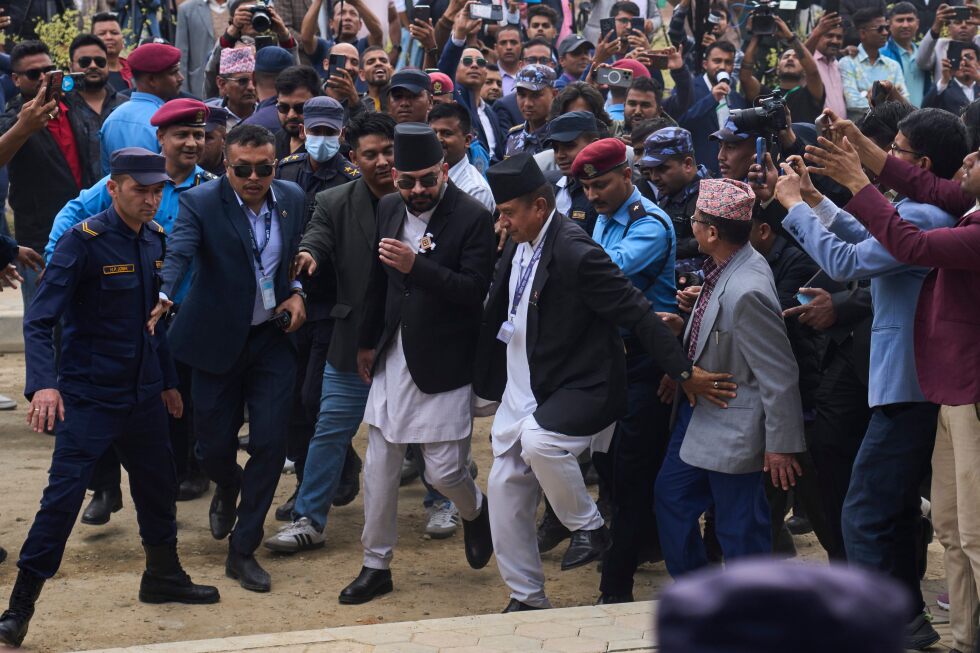
KATHMANDU, Nepal — In a historic political transition, 35-year-old Balendra Shah assumed office as Nepal’s youngest prime minister on Friday following his party’s decisive electoral triumph. The swearing-in ceremony, rich with cultural symbolism, occurred at precisely 12:34 p.m.—a time deemed astrologically auspicious by Hindu priests that also aligned with the numerological pattern “1-2-3-4.”
Shah’s Rastriya Swatantra Party secured nearly two-thirds of the seats in the House of Representatives during the March 5 elections, prompting President Ram Chandra Paudel to formally appoint the political outsider to lead the government. The victory represents a dramatic shift in Nepal’s political landscape, coming months after youth-led protests toppled the previous administration in September.
The elaborate inauguration incorporated both Hindu and Buddhist traditions, featuring ceremonial conch blowing (shankhnaad) and religious chanting by priests and lamas. The timing coincided with Ram Navami celebrations across the Himalayan nation, with Shah scheduled to enter his official office at 14:15 p.m.—another numerically significant time considered favorable.
Shah’s ascent marks a significant departure from Nepal’s established political order. As a structural engineer and former rap artist who gained prominence as Kathmandu’s mayor, he now faces the formidable challenge of addressing widespread public dissatisfaction with traditional parties accused of corruption and chronic instability. His party’s overwhelming mandate—securing approximately two-thirds of the 275 seats in parliament’s lower house—reflects a dramatic public repudiation of the political status quo.
Though not directly participating in the September uprising that resulted in dozens of casualties, Shah emerged as a vocal supporter of the predominantly Generation Z demonstrators. His administration now bears the responsibility of channeling this youth-driven momentum into tangible governance reforms in the nation of 30 million people, where religious and astrological traditions continue to profoundly influence public and political life.