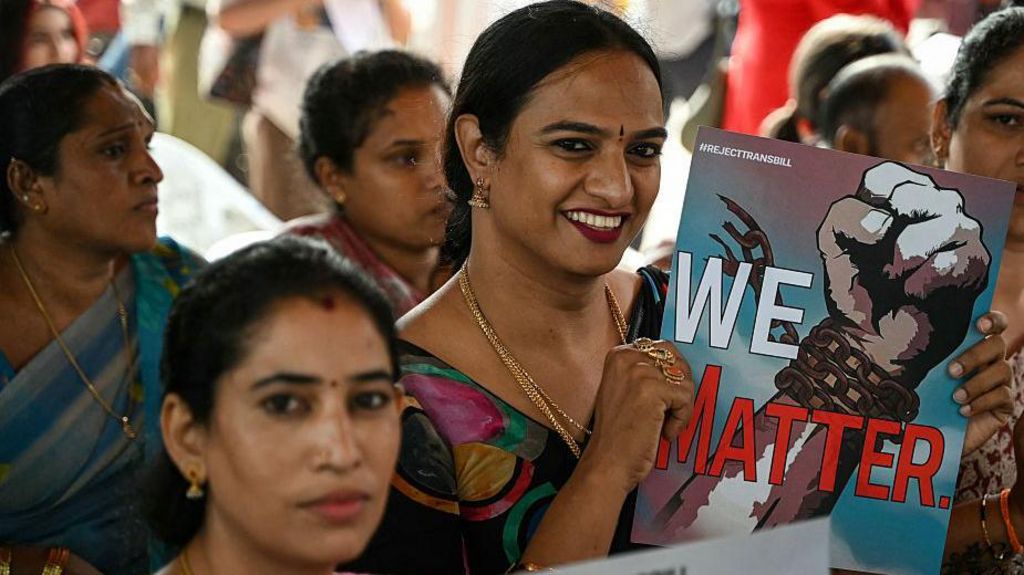
India’s parliamentary system has ratified contentious legislation that fundamentally alters the legal recognition framework for transgender individuals, eliminating the right to self-identification established by the nation’s Supreme Court in 2014. The amended Transgender Persons (Protection of Rights) Bill has ignited substantial opposition from LGBTQ+ advocacy groups, civil society organizations, and opposition political parties across the country.
The government maintains that these legislative modifications will enhance the delivery of welfare benefits and strengthen existing protections against exploitation and human trafficking. Officials argue that the previous definition of transgender identity was excessively broad, creating administrative challenges in identifying the most marginalized community members. The revised legislation now limits legal recognition to individuals defined by specific biological characteristics and intersex variations, while also mandating medical board certifications for gender-affirming procedures.
Despite governmental assurances, critics have condemned the legislation as a severe regression in human rights protections. Prominent activists including Laxmi Narayan Tripathi and Grace Banu have characterized the bill as an assault on personal dignity and autonomy, with Banu declaring it represents ‘violation rather than protection’ during recent press conferences in Delhi. Legal experts have echoed these concerns, noting that the elimination of self-determination principles contradicts the landmark 2014 Supreme Court ruling that originally recognized transgender people as a ‘third gender’.
The legislative controversy has triggered nationwide demonstrations, with transgender community members and allies organizing rallies and protests over the past fortnight. Opposition leaders have joined the criticism, with Congress party’s Rahul Gandhi denouncing the legislation as a ‘brazen attack’ on fundamental rights. A Supreme Court-appointed advisory panel has formally requested the government withdraw the bill, warning that the changes could significantly undermine years of progress in transgender rights advocacy.
India’s transgender population, estimated at approximately two million individuals, continues to experience substantial discrimination in education, healthcare, and employment sectors despite previous legal protections. The legislation now awaits presidential assent to become enforceable law, while advocacy groups prepare potential legal challenges to the controversial measures.