London’s Metropolitan Police stands accused of retroactively modifying its enforcement policies regarding Palestine Action protests to justify recent arrests under terrorism legislation. This controversy follows a February High Court ruling that declared the government’s ban on the direct action group unlawful.
Initially, the Met responded to the court’s decision by announcing it would cease arresting supporters of Palestine Action and those protesting its proscription under terrorism laws, opting instead to gather evidence for potential future prosecutions. However, in a significant reversal, the police force subsequently described this position as “interim” and announced a revised approach.
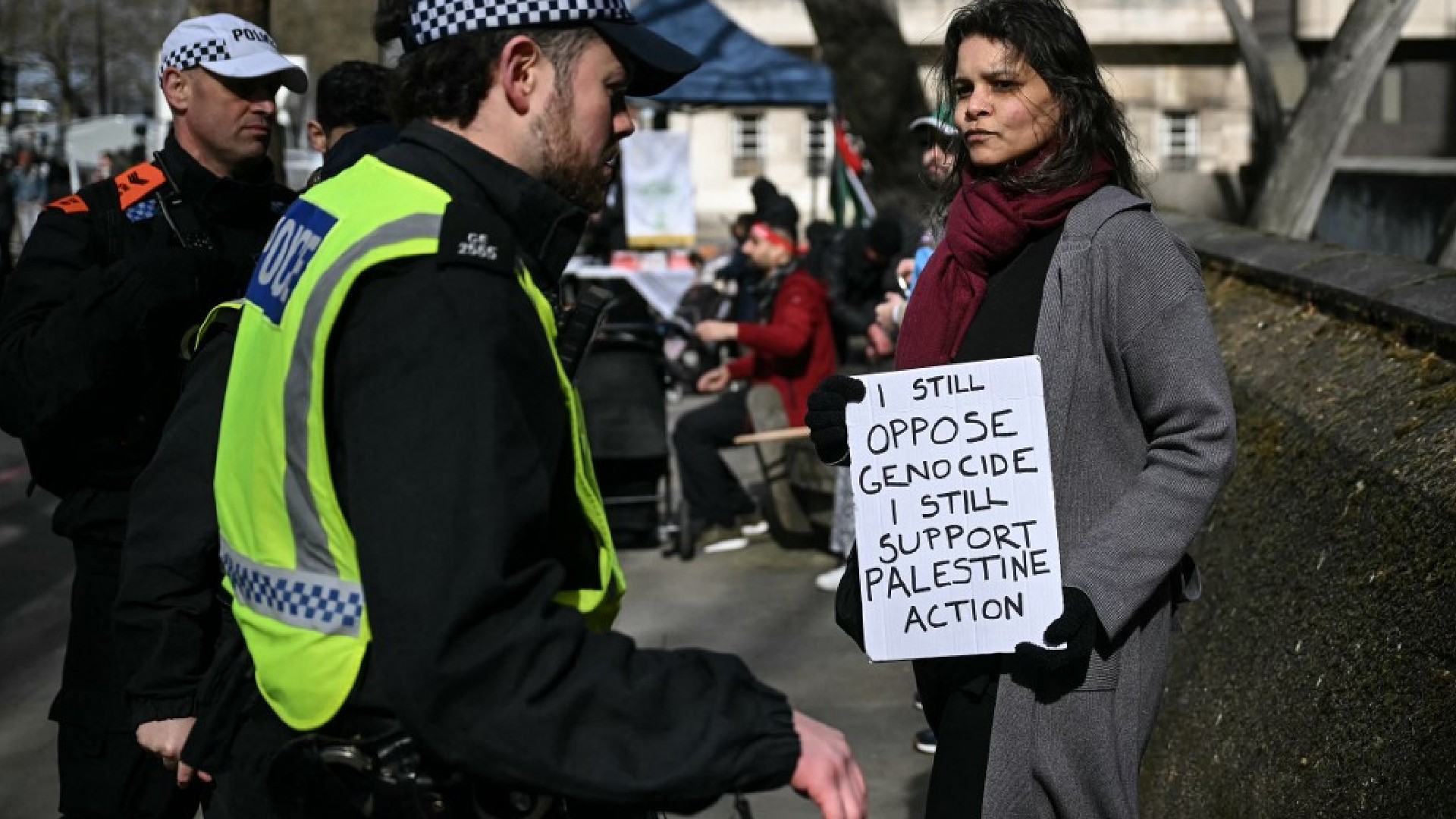
According to campaign organization Defend our Juries (DOJ), since the February 13th ruling, Metropolitan Police have conducted at least two arrests under Section 13 of the Terrorism Act for individuals holding signs supporting the proscribed group. One protester, identified as Ams, reported being arrested at London’s annual Al-Quds Day rally on March 15th while holding a sign stating: “I still oppose genocide, I still support Palestine Action.”
Ams described being surrounded by police shortly after a member of the pro-Israel group Campaign Against Antisemitism photographed her and shared the image with authorities. Despite police issuing pre-protest warnings about arresting individuals expressing support for Palestine Action, Ams noted that her arresting officers appeared confused about proper procedure, requiring multiple radio consultations to determine whether her actions constituted an arrestable offense.
DOJ reported writing to Met Commissioner Mark Rowley seeking policy clarification following Ams’ arrest, receiving no response until after announcing planned further protests. The police response ultimately referenced their new public statement reversing previous policy, with Deputy Assistant Commissioner James Harman characterizing this as self-explanatory.
Tim Crosland, a former government lawyer, criticized the police’s inconsistency, noting: “You would expect the police to have to be consistent with what they published. They’ve not felt the need to justify this in any way.” Crosland drew parallels to the original proscription being struck down due to the home secretary’s failure to follow proper policy.
A second protester, identified as Liesbeth, reported being arrested while awaiting a Eurostar train at St Pancras station on February 13th for allegedly supporting Palestine Action at a previous protest, despite already being arrested for the same offense and awaiting charges. She was held overnight before being released due to unprepared charge documentation.
With the Court of Appeal scheduled to hear the government’s appeal against the High Court ruling in late April, DOJ anticipates further mass arrests under terrorism legislation at an upcoming April 11th vigil. Home Office figures indicate over 1,600 people have been arrested under terrorism legislation for expressing support for Palestine Action since its July 2025 proscription, accounting for the majority of approximately 1,800 terrorism arrests that year—representing a 660 percent year-on-year increase.
Multiple rights organizations have warned that these actions constitute misuse of counterterrorism legislation and risk undermining fundamental human rights including freedom of expression and peaceful assembly.