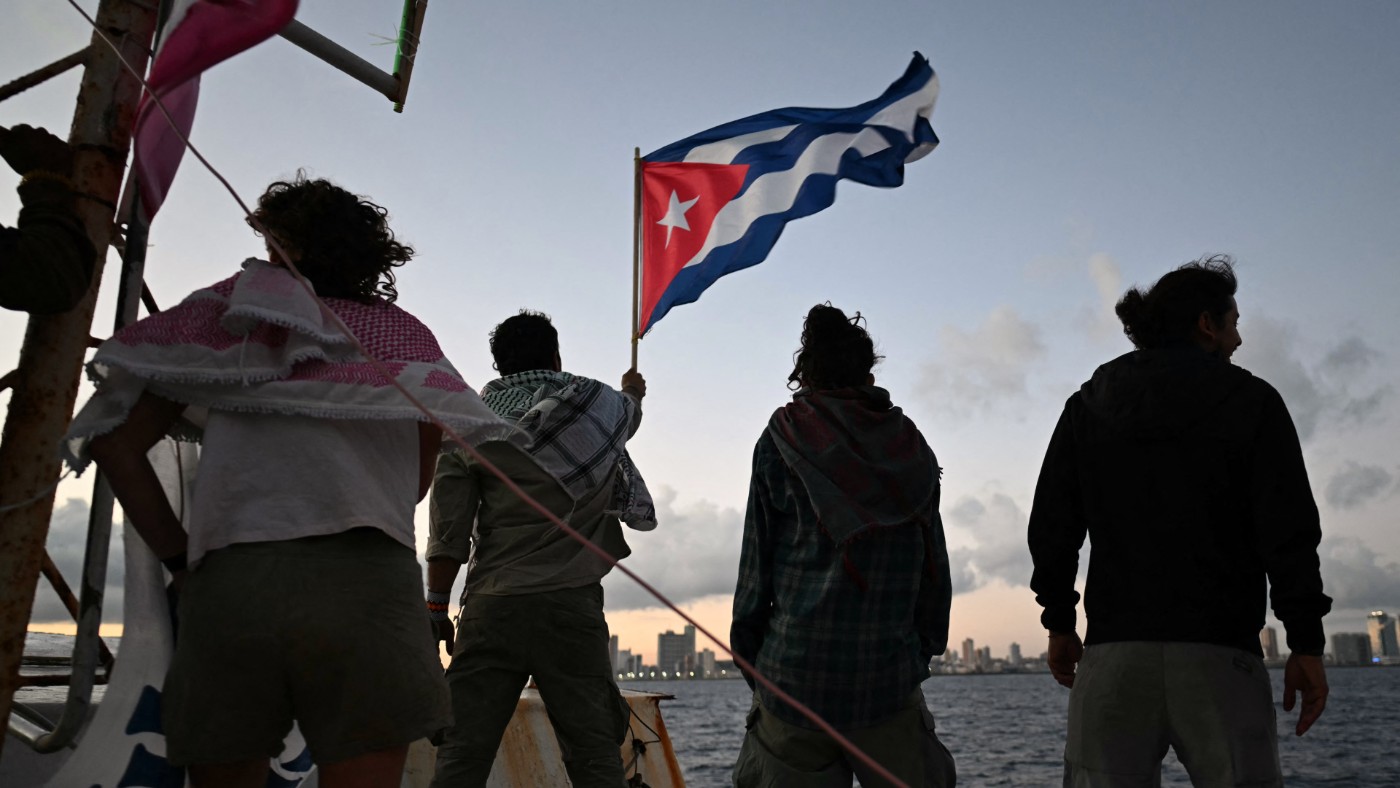
A sudden power outage plunged a Havana press conference into darkness as Irish rap group Kneecap addressed international aid delegates, creating a starkly symbolic moment that encapsulated Cuba’s escalating crisis. The blackout on March 21, 2026—the third nationwide grid collapse that month—occurred just as the Nuestra America Convoy delivered over 35 tonnes of essential supplies to the island nation struggling under intensified US sanctions.
The electricity failure exposed the brutal reality of Cuba’s energy shortage, immediately halting transportation, refrigeration, and communications systems. As night fell, Havana became almost entirely dark except for a handful of hotels powered by generators—a visible manifestation of the inequality created by US policies that restrict fuel to state systems while permitting supplies to private entities.
President Donald Trump’s administration has dramatically tightened the six-decade economic blockade against Cuba, including comprehensive restrictions on oil, finance, and imports. In January 2026, Trump signed an executive order declaring Cuba “an unusual and extraordinary threat” to the United States, while publicly boasting about his ability to “take” the Caribbean nation. These measures have crippled Cuba’s economy and vital public services, with the infant mortality rate more than doubling since the end of the Obama-era détente.
The humanitarian impact is most acute in healthcare facilities like Havana’s Covadonga hospital (renamed after Salvador Allende), where doctors struggle to maintain services with rationed generators and scarce medical supplies. Hospital director Dr. Milene Vazquez emotionally welcomed the arrival of antibiotics, chronic disease treatments, and other urgently needed medications from the international aid mission.
Cuban President Miguel Díaz-Canel framed the situation as part of broader global tensions, linking Cuba’s plight to conflicts in the Middle East and describing the struggle as “war and hegemony trying to crush peace and multilateralism.” Meanwhile, Cuban Americans like Danny Valdes of Cuban Americans for Cuba are challenging the narrative that all exiles support the blockade, emphasizing that “solidarity across the Florida Straits is stronger than the politics of blockade.”
As darkness enveloped Havana, the blackout served as a powerful reminder that resilience in Cuba now means organizing life around unpredictable outages, preserving food during brief power resurgences, and maintaining healthcare amid constant strain—all while facing what many Cubans fear might be impending regime change operations from the United States.