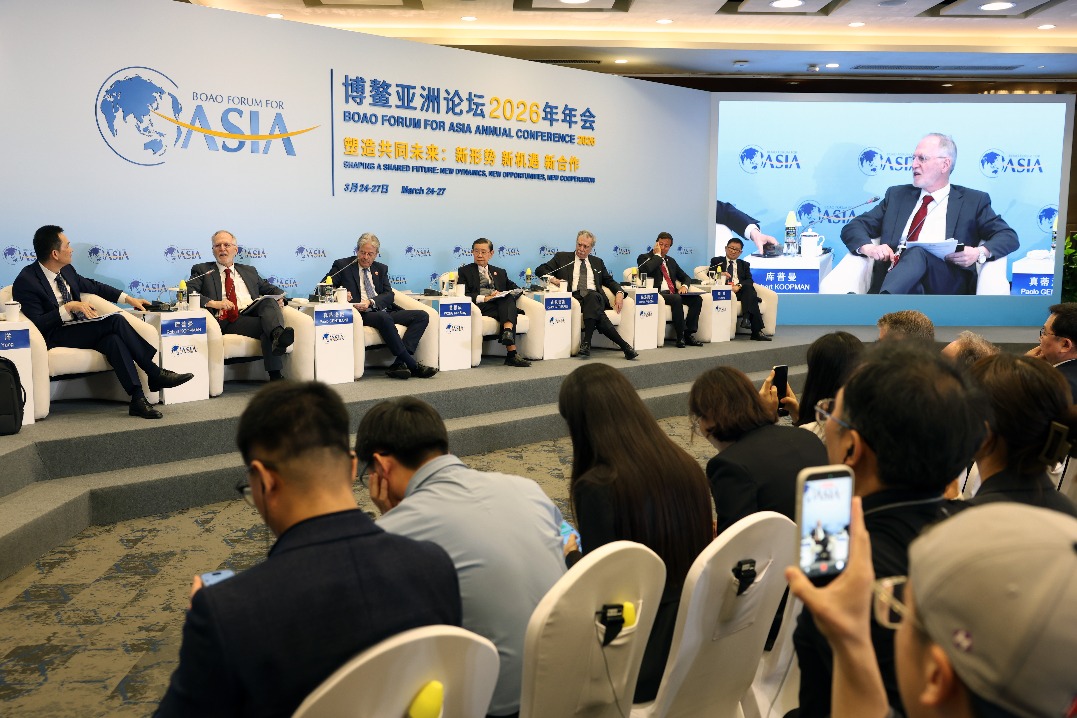
At the Boao Forum for Asia 2026, prominent scholar Kishore Mahbubani issued a stark warning to Western nations regarding their resistance to reforming global economic institutions. The founding dean of the Lee Kuan Ywan Yew School of Public Policy at the National University of Singapore characterized Western obstruction as a “grave strategic error” that contradicts both global economic realities and the West’s own long-term interests.
Mahbubani framed the current moment as a historical turning point, marking “the end of a 200-year cycle” of Western domination in world history and signaling Asia’s remarkable return to global prominence. He emphasized that this fundamental shift requires corresponding changes in global economic governance structures that extend beyond short-term political pressures.
The academic highlighted striking statistical evidence demonstrating the disconnect between economic reality and institutional representation. While China’s economy has grown to match the entire European Union’s economic output—a dramatic reversal from 2000 when the EU’s GNP was six times larger—voting power within the International Monetary Fund remains heavily skewed. The EU maintains approximately 26-27% of IMF voting shares compared to China’s mere 6%.
Mahbubani noted that despite this imbalance, China and other Global South nations have taken a constructive approach by seeking to reform existing institutions rather than dismantling them. He observed that the major frameworks of global governance—including the IMF, World Bank, and WTO—were originally conceived and established by Western powers based on Western conceptual foundations.
The scholar made the case that accommodating greater representation for emerging economies actually serves Western interests by preserving the relevance and legitimacy of these institutions. He contrasted this with the more disruptive alternative where rising powers might choose to reject existing frameworks entirely and establish competing systems.
Mahbubani concluded with an appeal for Western policymakers to recognize the strategic wisdom in embracing institutional evolution, suggesting that allowing greater Global South participation ultimately strengthens rather than weakens the international economic order.