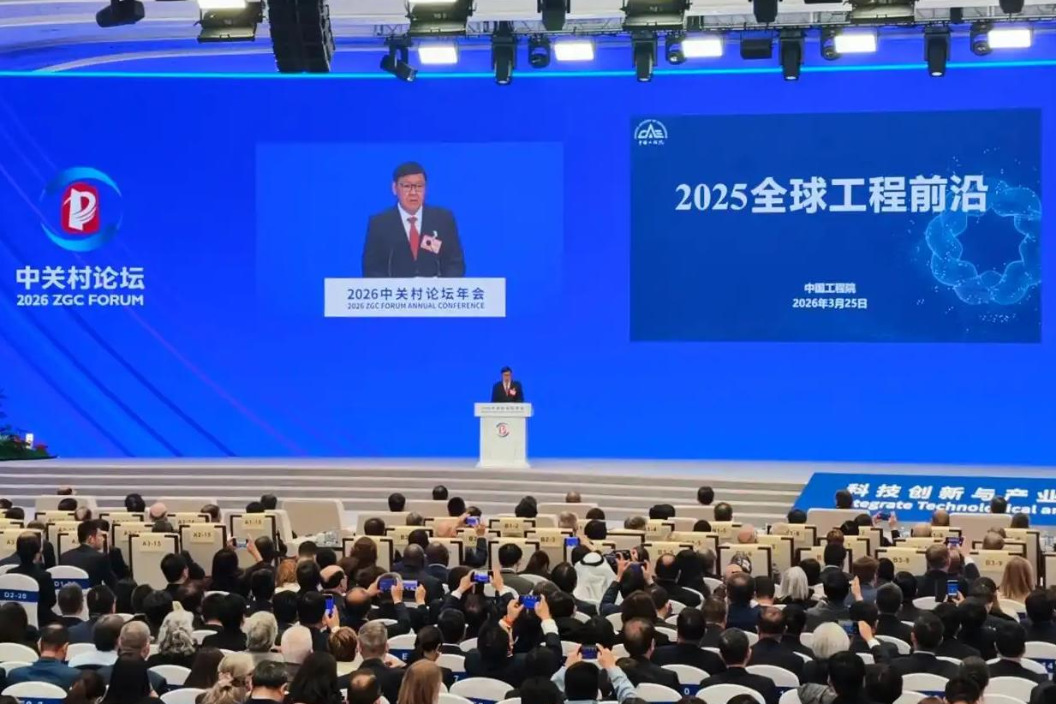
A landmark report unveiled at the 2026 Zhongguancun Annual Forum in Beijing has identified artificial intelligence as the central catalyst transforming global engineering practices. The Chinese Academy of Engineering’s ‘2025 Global Engineering Fronts’ report, presented Wednesday, demonstrates AI’s pervasive influence across 74 of the 189 identified engineering research and development fronts.
The comprehensive analysis, which incorporates high-impact academic papers, patents, and scientific news, reveals AI’s role in accelerating breakthroughs from energy material performance to research cycle compression. The technology enables revolutionary advances through big data analytics, intelligent design systems, and high-throughput automated experimentation platforms.
Professor Yang Baofeng of Harbin Medical University, a CAE member, characterized AI as ‘a powerful assistant’ that significantly enhances research efficiency across diverse sectors including aerospace infrastructure, bridge engineering, and healthcare innovation. He noted that different large language models offer specialized capabilities ranging from chemical formula analysis to massive data processing operations.
International experts echo this assessment. Peter David Lund, representing both the Finnish Academy of Science and Letters and the Swedish Engineering Academy, emphasized AI’s critical function in solving highly complex energy challenges. ‘Machine learning has enabled breakthroughs in smart grid optimization and plasma stabilization for fusion research—achievements previously considered unattainable,’ Lund stated.
The report underscores a fundamental transition in engineering methodology from single-agent applications to system-wide intelligence, marked by increasing automation, systematization, and intelligent integration. This shift substantially improves both the efficiency and quality of engineering solutions while enhancing capacity to address multifaceted global challenges.
Despite these advancements, researchers caution that AI remains a supportive tool rather than a replacement for human expertise. The report emphasizes the continued necessity of laboratory experimentation and interdisciplinary collaboration, particularly in sensitive fields like clinical medicine and cutting-edge research.
Looking forward, experts anticipate AI’s role will expand further, with Lund noting these developments represent ‘just the first steps’ in technological transformation. The report concludes that successful innovation requires maintaining focus on practical application and market pathways throughout the development process.