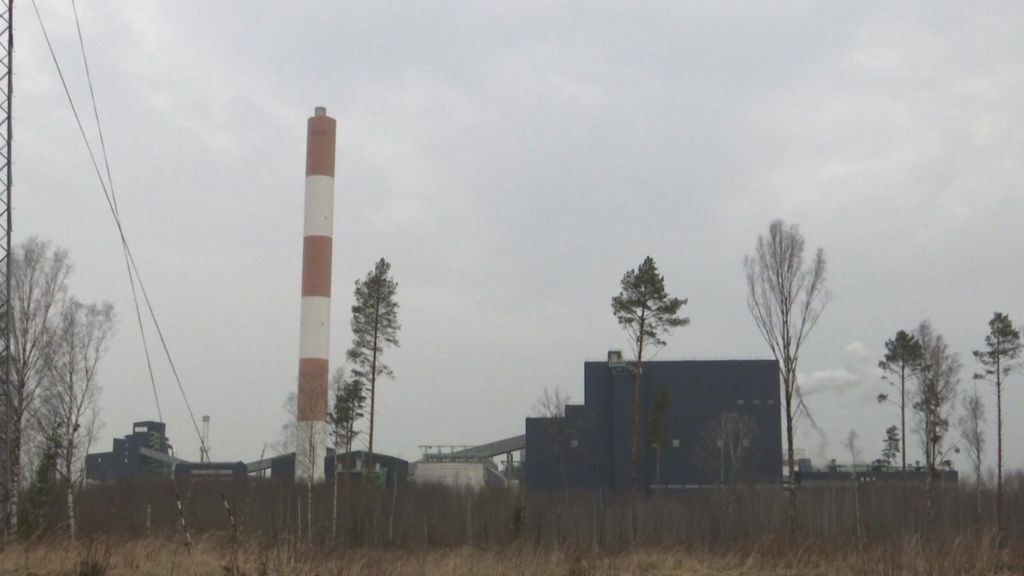
In a significant security development, Estonian and Latvian authorities confirmed that Ukrainian drones inadvertently entered their airspace from Russian territory overnight, resulting in two separate incidents with minimal damage.
According to official statements from Tallinn and Riga, one drone struck the chimney of the Auvere power plant in northeastern Estonia, causing what was described as ‘light damage.’ Simultaneously, another drone exploded in Latvia’s southern Kraslava region. Both nations reported no casualties or major infrastructure damage from these incidents.
The occurrences coincided with Ukraine’s substantial drone offensive targeting the Russian port of Ust-Luga on the Baltic Sea, located approximately 25 kilometers from the Estonian border. Estonian Prime Minister Kristen Michal detailed that the Ukrainian operation against Ust-Luga occurred in three waves between 03:00 and 08:00 local time, prompting Baltic air patrol activation and public emergency notifications warning citizens of ‘drone threat.’
Estonian Security Police Chief Margo Palloson characterized the incident as involving ‘a Ukrainian drone that deviated from its course, possibly affected in Russian airspace.’ This assessment was echoed by Latvian officials, with Prime Minister Edgars Rinkevics confirming the drone’s Ukrainian origin.
Latvian Defense Minister Andris Spruds curtailed his official visit to Ukraine to address the security situation, while Joint Staff Deputy Chief Egils Lescinskis suggested the drone had ‘most likely veered off course or was affected by electromagnetic warfare measures.’ Lescinskis acknowledged the inherent security challenges, stating nobody could ‘feel completely safe when military operations are taking place in neighbouring countries.’
Officials refrained from assigning blame to Ukraine, instead contextualizing the events within Russia’s broader aggression. Palloson warned that Estonia should anticipate ‘more such incidents,’ with Prime Minister Michal adding it was ‘pointless to create the illusion that we can build a wall on the border with Russia.’
The incident follows a similar occurrence in Lithuania earlier this week, where a Ukrainian attack drone crashed near the Belarusian border. Lithuanian authorities confirmed the drone was part of operations against Russia and indicated they would discuss airspace security protocols with Ukrainian counterparts.
The broader context reveals intensified drone warfare, with Ukraine launching nearly 400 drones toward multiple Russian regions overnight, including the Moscow area. This escalation comes as Russia launched its largest 24-hour drone assault on Ukraine, firing 948 drones that resulted in numerous casualties.