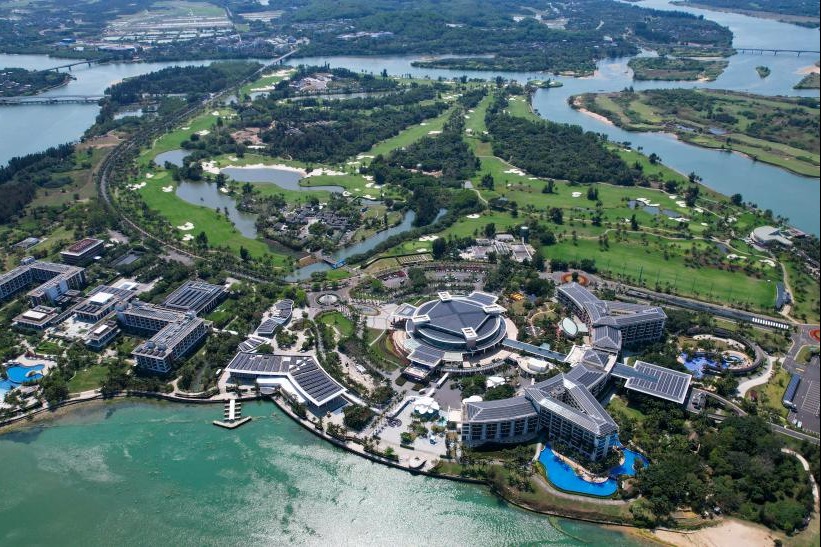
The Boao Zero-Carbon Demonstration Zone in China’s tropical Hainan province has reached a historic milestone in sustainable urban development, achieving near-total elimination of carbon emissions through comprehensive green infrastructure transformation. Official data reveals that carbon dioxide emissions from buildings and municipal infrastructure have plummeted from approximately 11,350 metric tons in 2019 to merely 14.6 tons by the end of 2025—representing a staggering 99.9% reduction in greenhouse gas output.
This environmental breakthrough results from a multi-faceted approach to sustainable development implemented since the zone’s establishment in 2022. The project, jointly initiated by China’s Ministry of Housing and Urban-Rural Development and the Hainan provincial government, encompasses 18 renovation projects across eight critical categories including green architecture, renewable energy integration, and sustainable transportation systems.
The zone’s energy infrastructure now generates 29 million kilowatt-hours of clean electricity annually—substantially exceeding its own consumption needs of approximately 19.4 million kWh. The surplus 9.6 million kWh is fed back into the regional power grid, generating 4,965 tons of carbon credits that contribute to broader emissions reduction efforts. This achievement was highlighted during the ongoing Boao Forum for Asia, which serves as a platform for showcasing regional innovation in sustainable development.
The demonstration zone, originally designated as the ‘Boao Near-Zero Carbon Demonstration Zone,’ received its current designation in March 2025 following the remarkable progress in emissions reduction. The project stands as a working model of large-scale carbon neutrality implementation, demonstrating practical approaches to balancing urban development with environmental sustainability through integrated green technology solutions.