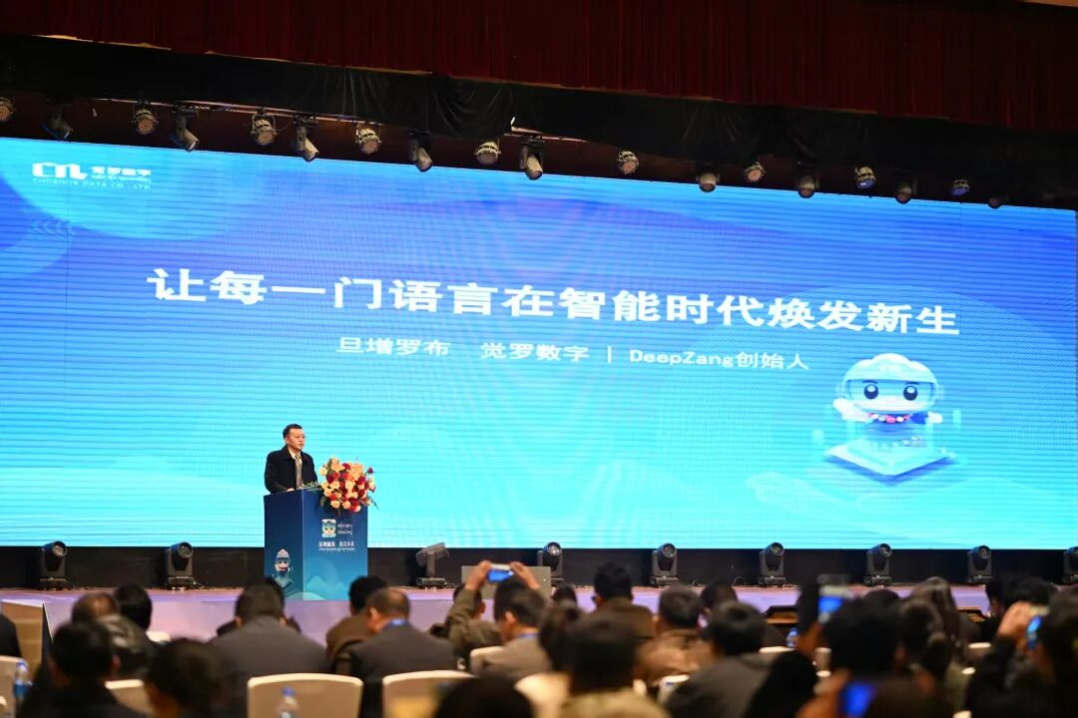
In a landmark development for both artificial intelligence and linguistic preservation, China has introduced DeepZang—the world’s inaugural large language model specifically engineered for the Tibetan language. The groundbreaking platform, unveiled in Lhasa by local technology firm Choknor, represents a significant stride in bridging digital divides and enhancing public service accessibility for Tibetan speakers.
DeepZang facilitates multilingual interactions in Tibetan, Mandarin Chinese, and English, integrating advanced functionalities such as AI-driven dialogue, real-time translation, and speech-to-text conversion. Its certification by the World Record Certification Agency as the ‘World’s First Tibetan Large Language Model’ underscores its pioneering status in global AI research.
According to Tenzin Norbu, founder of Choknor, the model culminates over four years of intensive development. It leverages an extensive dataset comprising nearly 70 million standardized parallel corpora and over 30,500 hours of voice recordings encompassing Tibet’s three primary dialects: Utsang, Kham, and Amdo. This repository now stands as China’s most comprehensive and meticulously annotated Tibetan speech database.
Beyond its technical achievements, DeepZang is poised for practical implementation across multiple sectors. Several institutions, including China Mobile and PICC Property and Casualty Co’s regional branches, have entered collaborative agreements to deploy the technology in government services, education, healthcare, and financial operations.
Li Yalong, Deputy General Manager at PICC Xizang, emphasized the model’s potential to overcome linguistic barriers in servicing rural communities: ‘It will enable the development of intelligent Tibetan-language customer support and policy interpretation tools, particularly in agricultural insurance.’
Academic users have reported efficiency gains in research workflows. Sonam Yontan, a doctoral candidate at Xizang University, noted: ‘The translation and search functionalities significantly accelerate material processing and source retrieval, marking an unprecedented advancement for Tibetan in AI.’
However, initial feedback indicates areas for refinement. Tibetan language instructor Nie Chang observed that while DeepZang’s linguistic capabilities are robust, its response latency exceeds that of mainstream models like ChatGPT. Some users also reported encountering paywalls after limited queries, potentially impacting accessibility.
In educational contexts, the model currently functions more as a search engine than a tailored pedagogical tool, with grammar explanations sometimes lacking clarity for non-native learners. Online discourse reflects mixed reactions, praising cultural preservation efforts while noting challenges in translation accuracy, complex query handling, and pricing structures.
Choknor acknowledges the model’s evolving status and commits to continuous improvement through data expansion and user feedback. The current mobile application represents merely one manifestation of the underlying technology, with potential future applications spanning wearable devices, sector-specific solutions in healthcare and education, and possibly extending to other minority languages like Mongolian and Uygur.