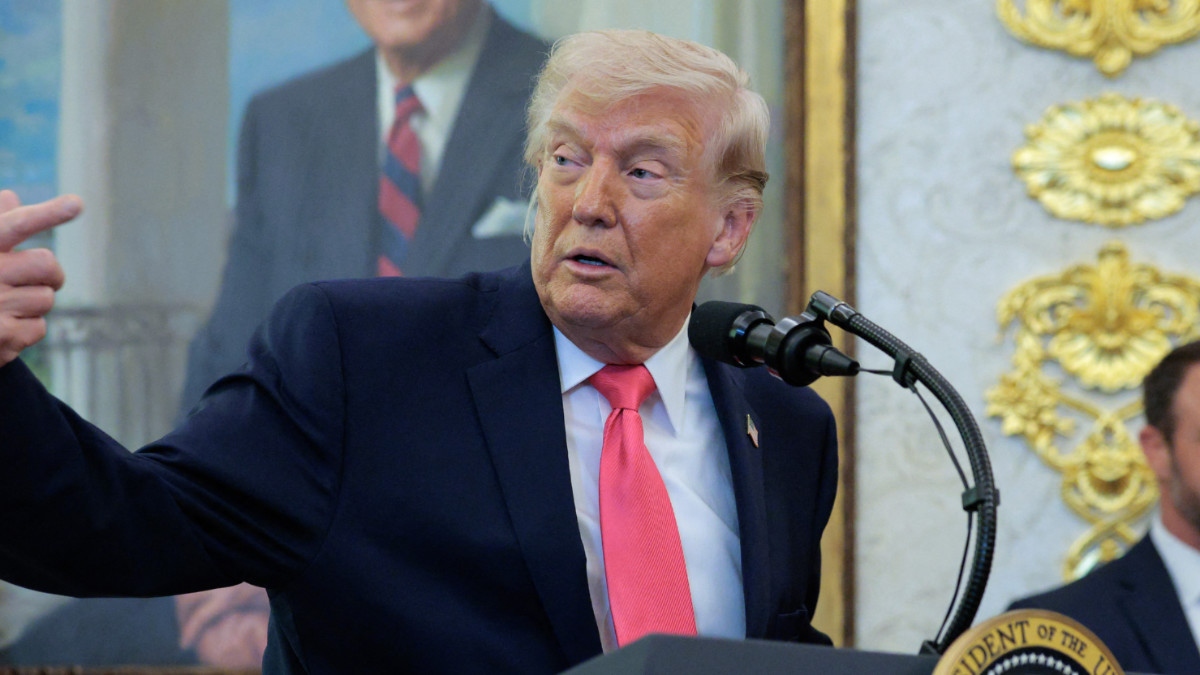
In a statement delivered from the White House on Tuesday, President Donald Trump announced that Iran had presented the United States with a substantial “present” related to oil and gas resources, characterizing it as a positive development in ongoing negotiations to conclude the military conflict. Despite this diplomatic overture, the simultaneous deployment of thousands of U.S. troops to the region presents a contradictory narrative.
Trump asserted American victory in the ongoing hostilities, stating, “We have won this war” and suggesting that the extensive targeting of Iranian officials amounted to effective “regime change.” He revealed that key administration figures, including son-in-law Jared Kushner, Special Envoy Steve Witkoff, Secretary of State Marco Rubio, and Vice President JD Vance, are actively engaged in negotiation efforts.
Meanwhile, military mobilization continues unabated. The New York Times reported the imminent deployment of approximately 3,000 elite troops from the 82nd Airborne Division to the Middle East, supplemented by an additional 2,500 personnel redirected from Asia. Military analysts indicate these forces could potentially be utilized to seize Iranian islands and coastline assets, reasserting U.S. dominance over the critical Strait of Hormuz energy chokepoint.
This dual approach of diplomacy and military posturing has created significant uncertainty among market analysts and regional diplomats. Amena Bakr, head of Middle East energy at analytics firm Kpler, emphasized on social media platform X that actions rather than words should be monitored, noting continued military movements and Iran’s maintained control over the Strait.
Iranian officials have denied reports of direct negotiations, with Parliament Speaker Mohammad Bagher Ghalibaf dismissing them as “fake news.” However, Arab officials and Hebrew media sources indicate behind-the-scenes diplomatic efforts, including a purported 15-point peace plan presented by the U.S. Tehran remains skeptical of U.S. assurances, having suffered attacks during previous negotiation attempts in June 2025 and February 2026.
The nature of Iran’s alleged “present” remains unclear, though Trump described it as “a very significant prize” worth “a tremendous amount of money” that demonstrated Iranian seriousness in negotiations. This development follows Trump’s recent threat to attack Iran’s energy infrastructure and his subsequent announcement of a five-day delay to allow for diplomatic resolution.
Parallel developments include Iran’s circulation of a letter through the International Maritime Organization indicating coordination possibilities for “non-hostile vessels” transiting the Strait of Hormuz, and reports of successful tanker transits through the strategic waterway.