The Middle East conflict continues to escalate with significant developments across diplomatic, military, and security dimensions. Pakistani Prime Minister Shehbaz Sharif has offered Islamabad as a potential mediator for negotiations between the US-Israel coalition and Iran, signaling diplomatic efforts to de-escalate tensions.
US Secretary of State Marco Rubio is scheduled to meet with G7 counterparts in France to coordinate responses to the ongoing crisis. Despite the alliance’s close ties with the United States, no G7 nation has explicitly endorsed the offensive against Iran, creating diplomatic friction with President Donald Trump’s administration. Trump has claimed ongoing communications with Tehran, though Iranian officials have denied these assertions.
Iran has intensified internal security measures, announcing the arrest of 466 individuals accused of destabilizing the country through online activities. The Iranian government has maintained internet restrictions since the conflict began on February 28, though specific details regarding the nature of the alleged offenses and arrest timelines remain undisclosed.
In a significant security appointment, Iran has named Mohammad Bagher Zolghadr, a former Revolutionary Guards commander, as head of Iran’s Supreme National Security Council, succeeding Ali Larijani who was killed in an Israeli strike last week.
The Gulf security architecture faces potential restructuring as Qatari officials describe a ‘breakdown of the security system’ that will necessitate regional reevaluation. Lebanon has dramatically escalated tensions by withdrawing accreditation for Iran’s ambassador and demanding his departure, accusing Iran’s Revolutionary Guards of directly commanding Hezbollah operations against Israel.
Military operations have intensified with Israel confirming completion of ‘large wave of strikes’ in Isfahan while announcing plans to establish a 30-kilometer ‘security zone’ inside Lebanon. French Foreign Minister Jean-Noel Barrot has warned against this measure, citing potential ‘major humanitarian consequences.’
The United Nations Human Rights Council will convene an emergency session to address Iranian strikes targeting Gulf region countries. Energy infrastructure has become a focal point with Iranian media reporting strikes on two gas facilities and a pipeline, though Energy Minister Abbas Aliabadi claims Iran’s distributed energy infrastructure (150 power plants nationwide) provides resilience against such attacks.
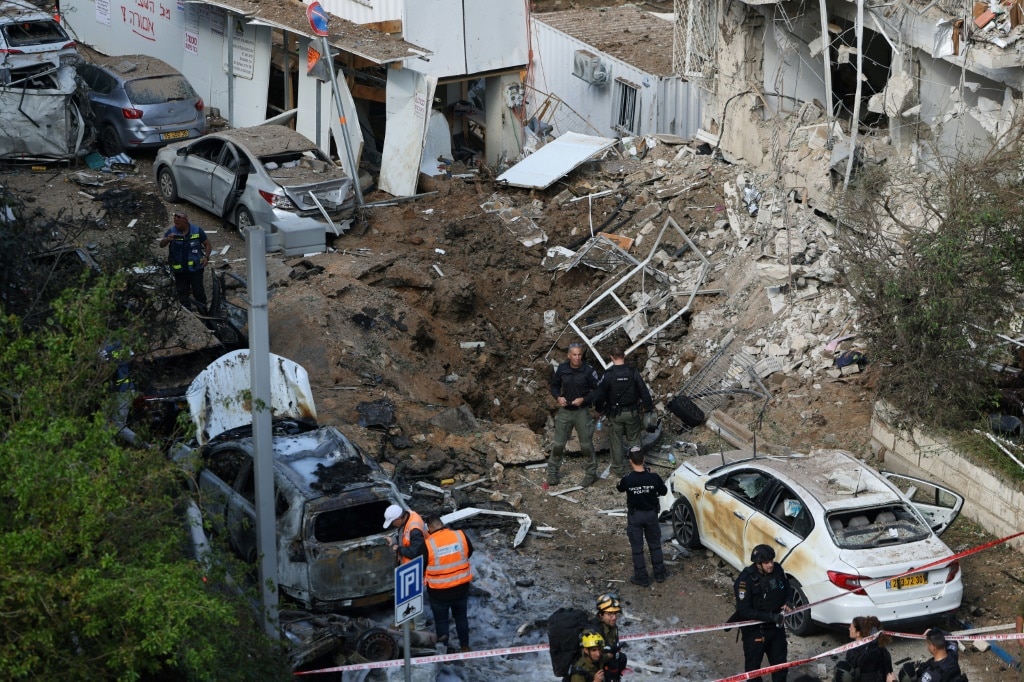
Casualties mount across the region with six Peshmerga fighters killed in Iraqi Kurdistan by what regional authorities describe as Iranian ballistic missiles. Tel Aviv reported four wounded from missile impacts, prompting Iran’s Revolutionary Guards to threaten ‘heavy missile and drone strikes’ in support of Palestinian and Lebanese civilians.
Lebanon’s health ministry confirmed at least two fatalities from an Israeli strike on Bshamoun, south of Beirut, while western Iraq witnessed the death of 15 fighters including Saad Dawai al-Baiji, provincial commander of the Hashed al-Shaabi forces, in an attack blamed on the United States.