International economists have commended China’s recently approved 15th Five-Year Plan (2026-2030) as a testament to strategic foresight and continuity amidst global uncertainties. The development blueprint, unveiled during China’s annual legislative sessions, has drawn particular praise for its comprehensive approach to economic transformation and technological advancement.
Speaking at Renmin University of China’s forum “Toward 2035: The grand strategies of the US and China in remaking our world,” prominent US economist Jeffrey Sachs highlighted China’s remarkable progress through “forward thinking” that benefits both national development and global stability. Sachs, Director of Columbia University’s Center for Sustainable Development, projected the next decade would represent another significant “period of progress” for China driven by sustained socioeconomic and technological advancement.
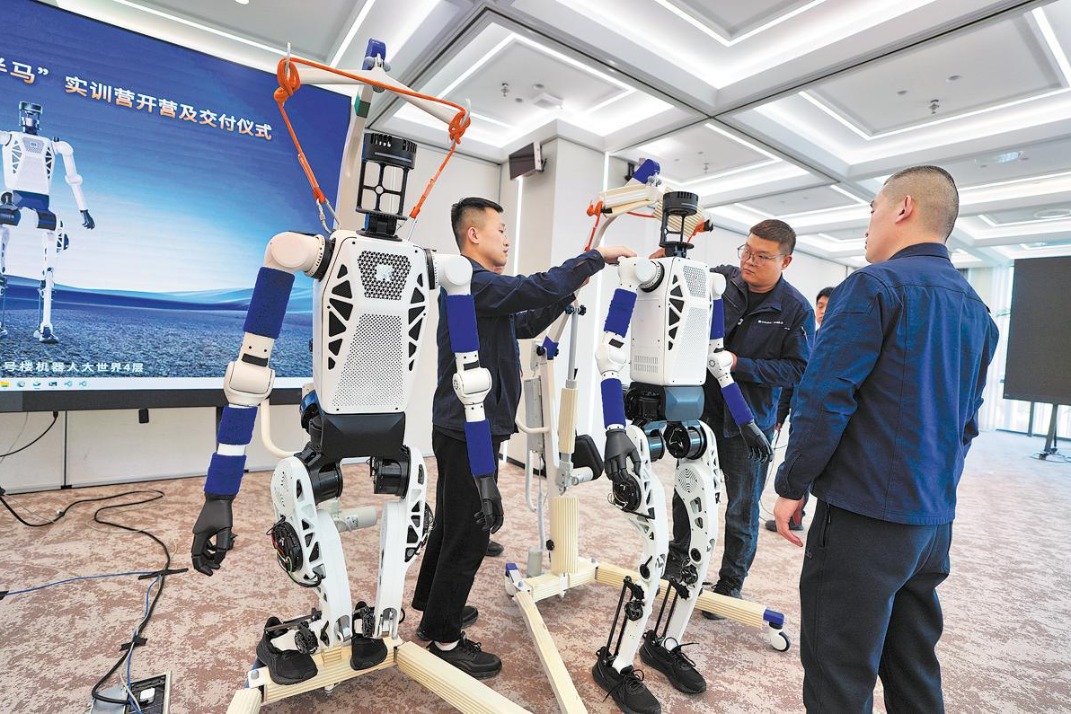
Chinese economist Wu Xiaoqiu detailed the plan’s strategic priorities, emphasizing the development of six emerging industries and six future sectors with particular focus on digitalization and artificial intelligence. Professor Wu revealed China has achieved fundamental breakthroughs in 32 out of 35 critical “bottleneck” technologies over the past decade, creating substantial momentum for continued innovation. He noted China’s vast domestic market, complete industrial system, and sustained technological innovation provide solid foundations for long-term growth despite complex external conditions.
The forum revealed striking contrasts in strategic approaches between major powers. Sachs criticized the United States for lacking cohesive long-term planning, describing a political system mired in division without consensus on fundamental issues including infrastructure and healthcare. He noted that while the US maintains nominal GDP superiority, this measurement is significantly inflated by higher service prices, particularly in healthcare which consumed 18% of US GDP in 2024.
Sachs emphasized that China’s economy already surpasses America’s in purchasing power parity terms, with living conditions between the two nations becoming increasingly comparable. He advocated strongly for cooperative approaches aligned with Confucian principles of harmony and win-win cooperation, directly challenging prevailing US political narratives that frame China as a threat.
The economist projected an inevitable transition toward a multipolar world order, criticizing US pursuit of global dominance as counterproductive. He specifically highlighted the natural evolution toward a “multicurrency world” where the US dollar would no longer maintain singular dominance. Given China’s position as top trading partner for over 100 countries, Sachs argued it is “quite natural that trade should be renminbi-denominated rather than dollar-denominated.”
Sachs suggested China continue advancing renminbi internationalization, describing targets of the currency accounting for one-fourth of international trade settlements within a decade as “realistic” and “achievable.” Professor Wu echoed calls for equal and transparent competition between China and the United States, emphasizing the importance of jointly injecting stability into global economic governance frameworks.