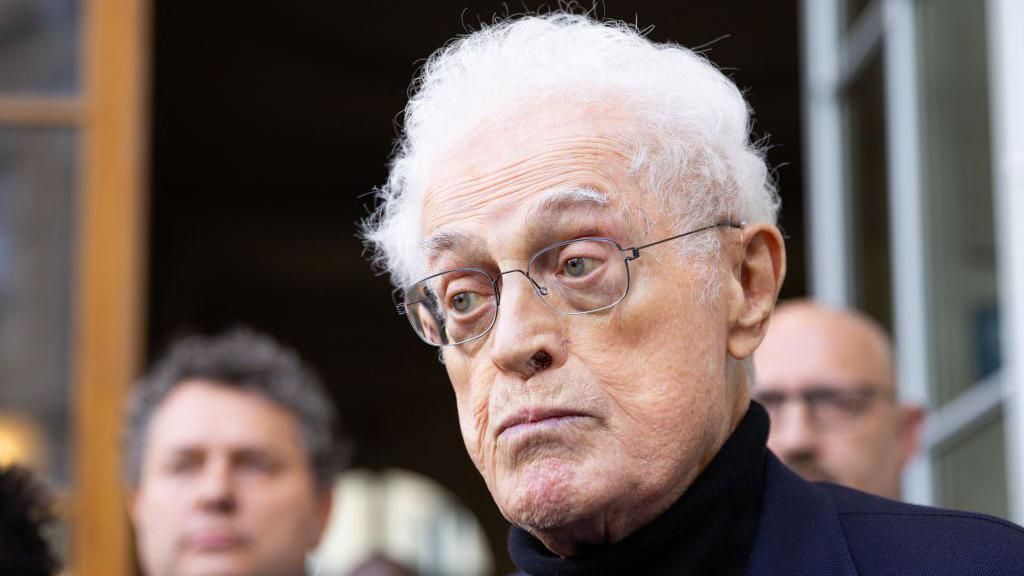
Lionel Jospin, the former French Socialist Prime Minister whose political career was marked by both significant legislative achievements and a stunning electoral defeat, has passed away at age 88. His death on Monday prompted an outpouring of tributes from across France’s political spectrum, recognizing his profound impact on the nation’s modern history.
Jospin’s political journey was characterized by remarkable contradictions. Serving as Prime Minister from 1997 to 2002 under conservative President Jacques Chirac during France’s unique ‘cohabitation’ period, he implemented groundbreaking social reforms while simultaneously pursuing economic policies that alienated his left-wing base. His government introduced the transformative 35-hour working week that remains French law despite ongoing business criticism, and he championed the PACS civil partnership for same-sex couples, laying crucial groundwork for eventual marriage equality.
However, Jospin’s political legacy remains inextricably linked to the seismic upset of the 2002 presidential election. His first-round elimination, finishing narrowly behind far-right leader Jean-Marie Le Pen amid a fragmented left-wing field, sent shockwaves through French politics and prompted his immediate retirement from public life. The humiliation was particularly striking given his consistently high approval ratings during his premiership.
Born in 1937 in Meudon, Paris, to a prominent Socialist activist family, Jospin’s background was steeped in political consciousness. His Protestant upbringing, which he abandoned in adolescence, was frequently cited as influencing his characteristically austere demeanor. After education in Paris’s elite institutions including the prestigious ENA administration school, Jospin’s early political affiliations proved controversial when revealed decades later—he had been recruited by the Trotskyist Communist Internationalist Organisation (OCI) in the 1960s, a fact he concealed until 2001.
His mainstream political ascent began when he joined François Mitterrand’s reorganized Socialist Party in the 1970s. Mitterrand became his political mentor, appointing him party secretary in 1981 and later Education Minister in 1988. Though their relationship eventually cooled due to Jospin’s criticism of Mitterrand’s governing style, this patronage established him as a central figure in French socialism.
Jospin is survived by his wife, philosopher Sylviane Agacinski. Current President Emmanuel Macron praised him as embodying “a lofty idea of the Republic,” while former President François Hollande recognized him as “one of France’s greatest leaders.” Despite his controversial decisions and dramatic exit from politics, Jospin is remembered as an intellectually rigorous and fundamentally honest statesman who left an indelible mark on France’s social fabric.