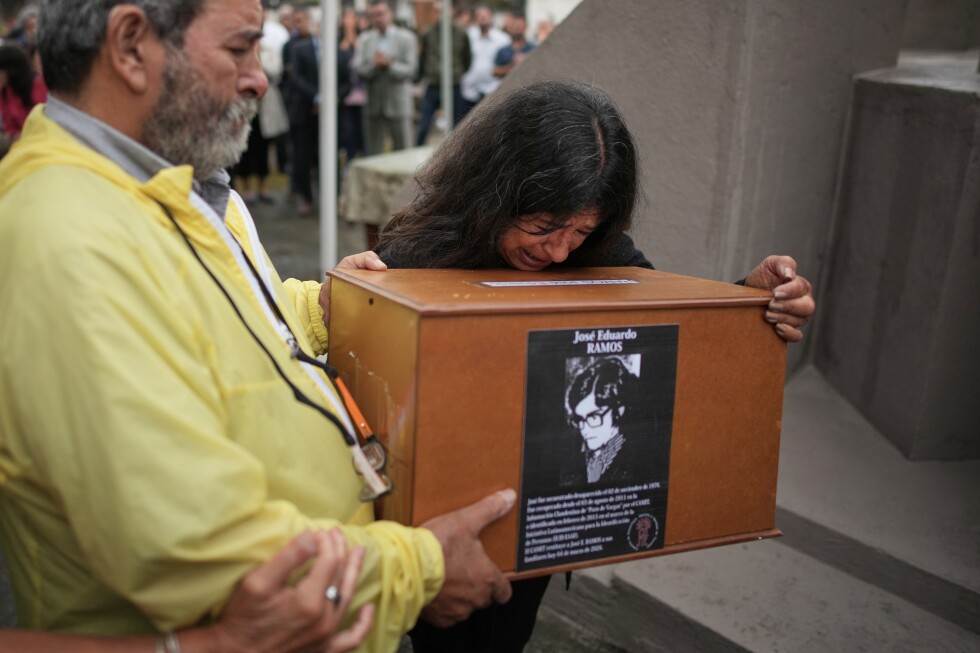
In a solemn ceremony in Argentina’s Tucumán province, relatives of Eduardo Ramos and Alicia Cerrotta finally laid their remains to rest, closing a half-century search for truth. The couple—a 21-year-old journalist-poet and 27-year-old psychologist—were among the thousands forcibly disappeared during the nation’s brutal military dictatorship that began with the 1976 coup.
The military junta led by Jorge Rafael Videla systematically eliminated perceived dissidents through abduction, torture, and clandestine executions. Victims were frequently disposed of via ‘death flights’ (dumping sedated prisoners into rivers) or in mass graves like the Pozo de Vargas—a 40-meter-deep well where Eduardo and Alicia’s remains were eventually discovered among 149 other victims.
Their identification in 2011 launched a painstaking forensic process by the Argentine Forensic Anthropology Team, which has identified 121 sets of remains from the site through bone fragment analysis. The Ramos family waited additional years for more complete skeletal reconstruction before burial.
This search for justice has faced persistent obstacles: military denial, societal silence, and recently, budget cuts to human rights programs under President Javier Milei’s austerity measures. His administration downgraded the Human Rights Secretariat and dismissed archival research teams, further complicating efforts to locate the estimated 30,000 disappeared.
As families continue seeking closure, the mausoleum in Tafi Viejo cemetery stands partially empty—a physical testament to Argentina’s unfinished reckoning with state terrorism and the enduring quest for truth.