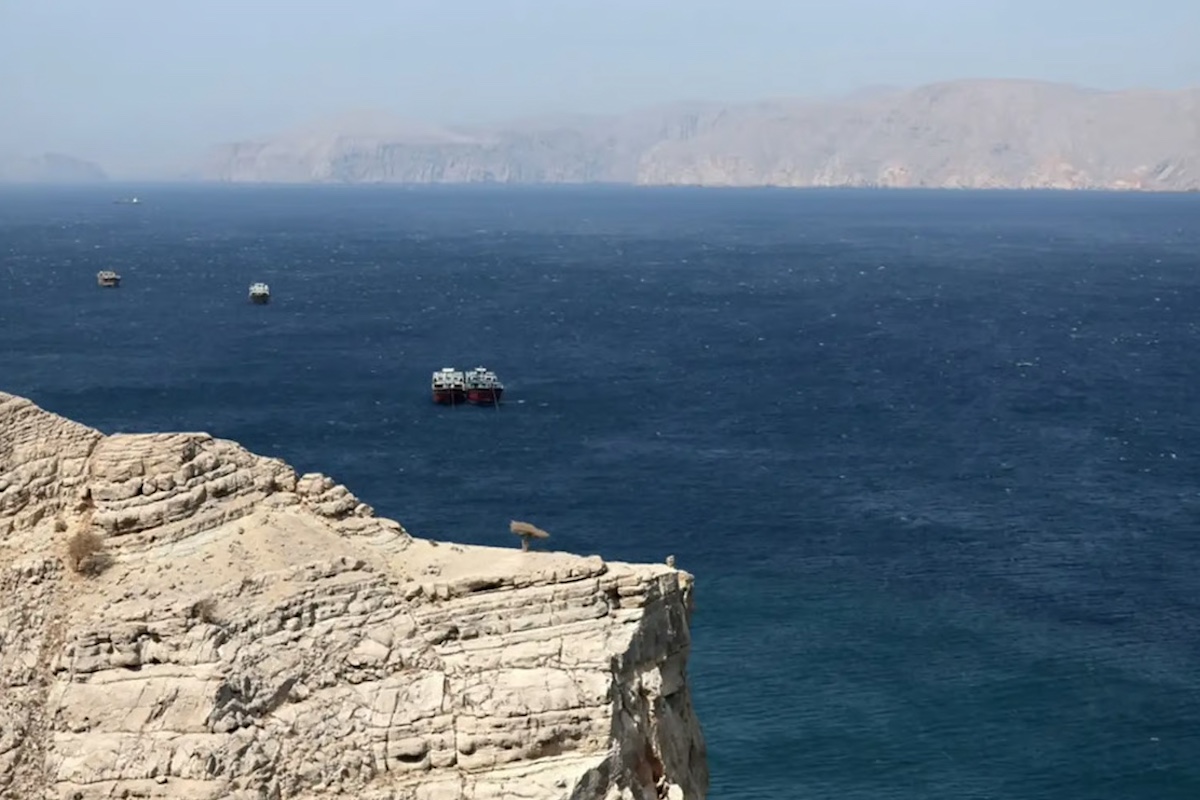
The strategic vision of naval historian Captain Alfred Thayer Mahan—that control of sea lanes translates to global dominance—faces its most significant test in the Strait of Hormuz. Iran’s recent blockade of this critical maritime chokepoint has exposed the inherent vulnerabilities of a global trading system built upon American-enforced maritime security.
Mahan’s 19th-century doctrine, inspired by British naval supremacy, posited that national power derived from command of maritime routes. The United States operationalized this philosophy after World War II, establishing a global network of naval bases to guarantee open navigation—not as altruism but as strategic advantage. This system enabled what became known as American globalization, with predictable movement of oil, goods, and capital through vital chokepoints like the Strait of Malacca, Suez Canal, and Hormuz.
The current crisis reveals the paradox of this dependence. Iran’s geographic leverage—closing a waterway transmitting 20% of global oil supplies and 25% of natural gas—has triggered economic shocks worldwide. Crude prices have nearly doubled to $116 per barrel since the blockade began, while urea fertilizer prices have surged 26%. The strait has become Iran’s strategic bargaining chip, potentially enabling demands for war reparations following U.S.-Israeli airstrikes.
Meanwhile, China is pursuing an alternative vision through its Belt and Road Initiative—a trillion-dollar geopolitical redesign of Eurasian connectivity. By constructing rail links that halve transit times between China and Europe, and building ports from Pakistan to Greece, China challenges Western-controlled maritime chokepoints. This shift aligns with Halford Mackinder’s ‘Heartland Theory,’ which predicted future power struggles would center on control of Eurasian land routes rather than sea lanes.
Iran emerges as the critical hinge in this geopolitical reconfiguration—a bridge between Central Asia and the Indian Ocean possessing the region’s largest combined energy reserves. Reports of Iran considering yuan-based oil payments for Hormuz transit could accelerate de-dollarization, potentially reshaping globalization itself. In this fractured landscape, nations and corporations increasingly prioritize security over cost efficiency—a calculus that may ultimately redefine global trade architecture.