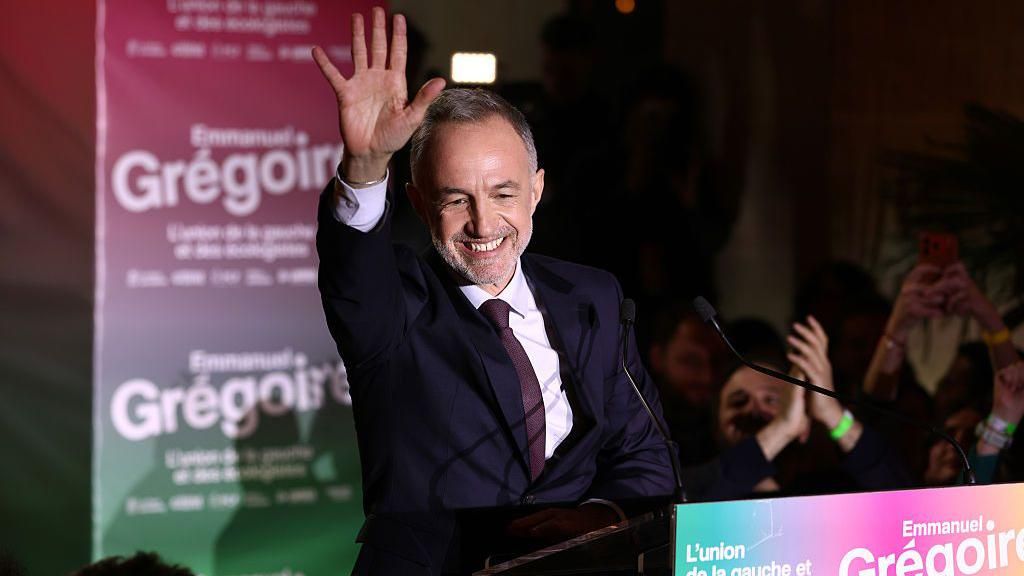
In a significant test of France’s political landscape ahead of next year’s presidential elections, Socialist candidates and their allies successfully maintained control of four major French cities—Paris, Marseille, Lyon, and Lille—during Sunday’s municipal elections. The results revealed both resilience and fragmentation within France’s political factions, with Emmanuel Grégoire ascending to the mayoralty of Paris following Anne Hidalgo’s tenure.
The electoral outcome demonstrated notable gains for both far-left and far-right movements. Marine Le Pen’s allies achieved a breakthrough in Nice, while the France Unbowed party (LFI) secured victory in the northern city of Roubaix. However, the evening’s most telling development emerged from the failed alliances between mainstream left parties and the far-left LFI, which resulted in voter migration toward center and right-wing candidates in traditional Socialist Party strongholds including Clermont-Ferrand and Brest.
Political analysts noted that in cities where incumbent Socialists distanced themselves from LFI due to allegations of sectarian anti-Semitism within its ranks, left-wing administrations were comfortably reelected. Lyon presented an exceptional case where ecologist Mayor Gregory Doucet maintained an alliance with LFI yet still prevailed, largely attributed to the inadequate campaign run by right-wing challenger Jean-Michel Aulas.
Pierre Jouvet, secretary-general of the Socialist Party, starkly assessed that ‘LFI wins nothing—and what is worse it is the LFI that brings about defeat.’ This sentiment followed controversy surrounding LFI, including charges against a parliamentary assistant for incitement to murder a far-right student in Lyon and inflammatory remarks from party leader Jean-Luc Mélenchon regarding Jeffrey Epstein’s Jewish heritage.
Despite these controversies, many Socialist and Green candidates formed what right-wing critics termed ‘alliances of shame’ with LFI after the first round of voting, though these partnerships ultimately failed in several cities including Toulouse, Strasbourg, Poitiers, Limoges, and Tulle.
In Paris, Grégoire’s victory aligned with pre-election polling and reinforced the capital’s left-wing orientation. His predecessor’s anti-car policies generally enjoyed voter support. Right-wing candidate Rachida Dati, a combative former minister, proved divisive, with her impending corruption trial and endorsement from far-right figure Sarah Knafo likely swaying voters against her.
The far-right National Rally (RN), while leading in presidential preference polls, failed to capture its targeted cities of Marseille and Toulon as opponents united against it. In Nice, however, UDR leader Eric Ciotti secured a decisive victory over incumbent Christian Estrosi, signaling emerging right-wing alliances without traditional taboos against collaborating with Le Pen’s movement.
The elections also highlighted the growing strength of far-left movements in suburban areas with concentrations of immigrant working-class communities and the so-called ‘intellectual proletariat,’ while the RN confirmed its foothold in provincial France beyond major urban centers.
Ultimately, mainstream parties across the left-right spectrum emerged as the night’s primary beneficiaries, with pro-Macron Renaissance party scoring a morale-boosting victory in Bordeaux and former Prime Minister Édouard Philippe winning in Le Havre—a significant development given his potential as a centrist candidate in the 2027 presidential election.
The results suggest that mainstream candidates could prevail in presidential run-offs against extremist opponents, though concerns persist regarding the possibility of a final-round confrontation between two candidates from the political extremes.