The transitional government in Damascus has reversed course on a controversial alcohol prohibition policy following widespread public condemnation and accusations of sectarian discrimination. The initial decree, issued Monday, banned alcohol sales in restaurants and nightclubs citywide while explicitly exempting three predominantly Christian neighborhoods—Bab Touma, Qassaa and Bab Sharqi. Authorities justified the measure as responding to ‘numerous complaints’ about practices ‘contrary to public morals.’
By Sunday, facing substantial backlash from residents and religious communities, the Damascus Governorate issued a clarifying statement that significantly softened the restrictions. The updated policy now permits alcohol sales for tourism purposes in hotels, restaurants and other designated establishments throughout the capital.
The government extended a formal apology to Christian communities, acknowledging the original decision had been ‘circulated inappropriately’ and pledging to reconsider the neighborhood-specific exemptions. Official statements emphasized these areas ‘constitute an icon of the capital’s identity and culture’ and promised revised policies that wouldn’t ‘offend any constituent groups.’
The incident marks another contentious social policy under President Ahmed al-Sharaa’s administration, which assumed power after ousting Bashar al-Assad in December 2024. While the government has largely avoided imposing social restrictions, recent measures including January’s ban on makeup for female public sector employees and mandatory full-body swimsuits on beaches have raised concerns about increasing social conservatism.
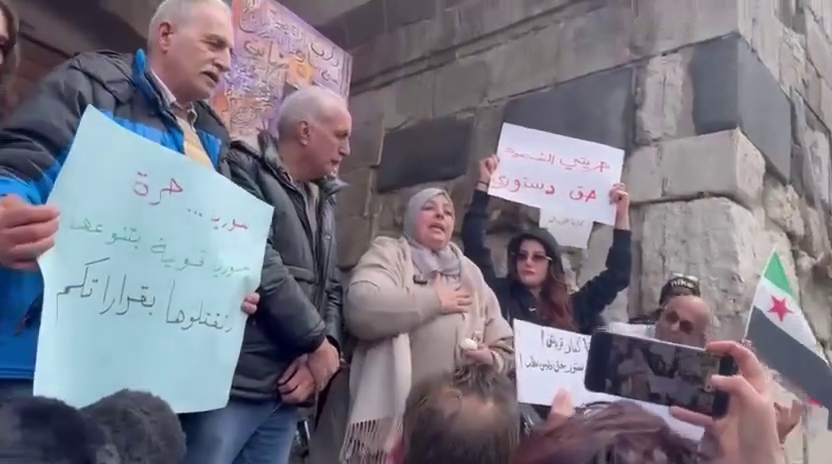
Sunday saw cross-community protests in Bab Touma, where both Muslim and Christian demonstrators condemned the alcohol policy as sectarian and threatening to social cohesion. Christian organizations issued a joint statement warning that designating Christian neighborhoods as alcohol-distribution zones could make them ‘clear and direct targets for terrorist attacks,’ referencing Syria’s history of Christian persecution.
The controversy emerges as the transitional government faces multiple challenges, including domestic unrest, Israeli attacks, and complex diplomatic relations. The administration maintains that popular elections remain unworkable following Syria’s 13-year civil war, which caused hundreds of thousands of deaths and millions of displacements.