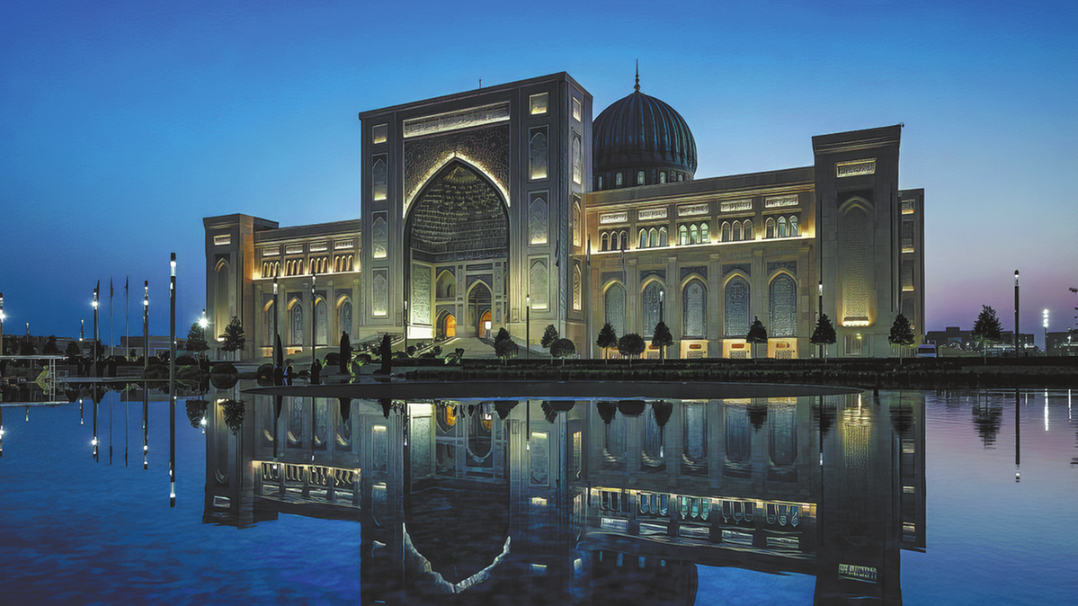
Tashkent has unveiled a transformative cultural institution that seamlessly blends historical preservation with cutting-edge technology. The Center for Islamic Civilization, inaugurated in March 2026, represents Uzbekistan’s most ambitious cultural undertaking in decades, earning recognition from CNN as a premier tourist destination and architectural marvel.
Designed with meticulous attention to Timurid-era architectural traditions, the 10-hectare complex features a striking 65-meter azure dome and four golden gates symbolizing national unity. The structure incorporates calligraphic inscriptions from the Quran while integrating modern technological solutions that create an immersive visitor experience.
The center revolutionizes traditional museum concepts through innovative exhibits like the Wall of Civilizations—a massive multimedia installation demonstrating humanity’s continuous intellectual progress. Advanced technologies including virtual reality, artificial intelligence, and holograms bring ninth-century manuscripts and ancient observatories to life. The facility also houses the Time Capsule interactive project, allowing visitors to leave messages for future generations, and the 1001 Inventions Laboratory designed to spark children’s interest in engineering and natural sciences.
The institution functions as both research hub and public educational space, featuring an extensive second-floor library containing over one million volumes. The surrounding grounds adhere to contemporary urban planning and environmental sustainability standards, creating an accessible cultural zone for residents and international visitors alike.
President Shavkat Mirziyoyev initiated the project in 2017, personally overseeing its development and recommending the incorporation of scientific projects from more than 2,000 researchers. The center has attracted international acclaim, including placement on the Prix Versailles list of ‘world’s most beautiful museums of 2026’ and praise from UNESCO Director-General Khaled El-Enany, who recognized it as a ‘unique civilizational complex’ integrating next-generation museum technology with advanced research infrastructure.
The center has also facilitated strengthened cultural diplomacy, hosting presidents from five Central Asian countries and supporting the repatriation of Uzbekistan’s cultural heritage scattered abroad. Its opening coincides with deepening Uzbekistan-China relations, particularly in tourism, with visitor numbers tripling following the 2025 visa-free policy implementation and Uzbekistan Tourism Year celebrations.