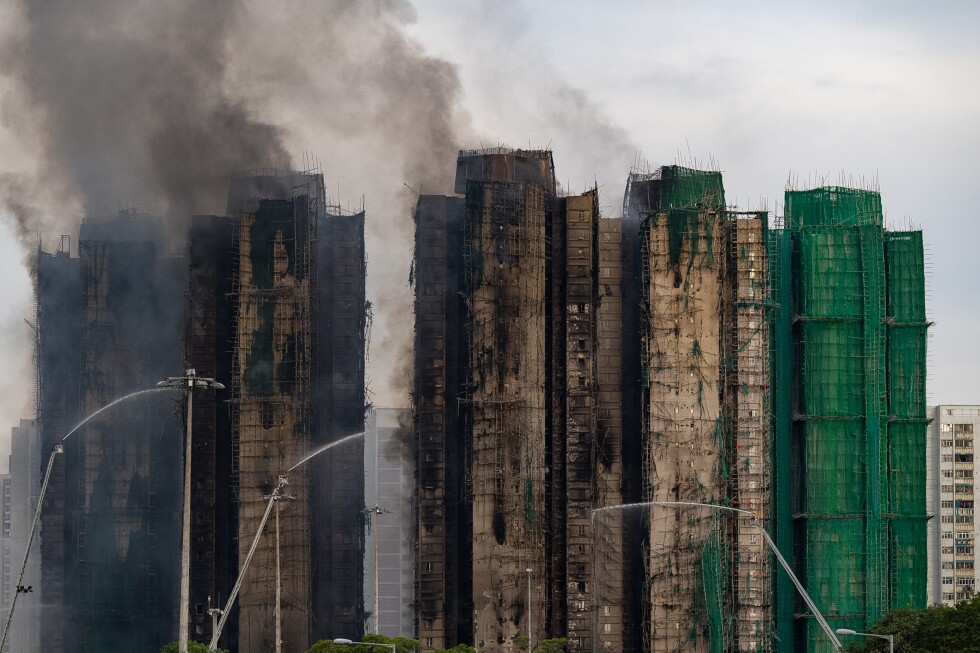
HONG KONG — A landmark investigative hearing into Hong Kong’s most catastrophic fire in over two decades commenced on Thursday, unveiling a devastating sequence of systemic failures that enabled the inferno to consume seven residential buildings and claim 168 lives in November 2025. The independent committee, established last December, conducted its first evidentiary session focused on the tragedy that obliterated the densely populated Wang Fuk Court community in Tai Po.
Victor Dawes, lead counsel for the investigation, presented opening arguments detailing how the disaster resulted from an unprecedented convergence of safety violations. Forensic evidence indicates the blaze originated in a light well exterior to lower-level units, where discarded cigarette butts were discovered alongside scaffolding materials.
Dawes revealed that critical life-saving systems—including fire alarms and emergency hose systems—were deliberately deactivated during the incident. Compounding these failures, construction crews had installed highly flammable scaffolding netting and sealed ventilation points with combustible foam boards, creating ideal conditions for rapid fire propagation.
‘Virtually every fire protection mechanism designed to safeguard residents failed due to human intervention,’ Dawes stated during the proceedings. The rapid escalation of the November 26 fire prompted mass evacuations and led to multiple arrests concerning manslaughter, fraud, and corruption charges.
The judicial panel, operating under a nine-month mandate, will additionally examine potential bid-rigging practices within Hong Kong’s building maintenance sector. Meanwhile, displaced survivors continue residing in temporary accommodations across the city while awaiting permanent housing solutions.
Government officials recently proposed buying back property rights from affected homeowners, though this compensation approach has disappointed residents hoping for neighborhood reconstruction. Chief Executive John Lee announced plans for supervised apartment visits in April, enabling former residents to retrieve salvagable belongings from the fire-damaged complex.