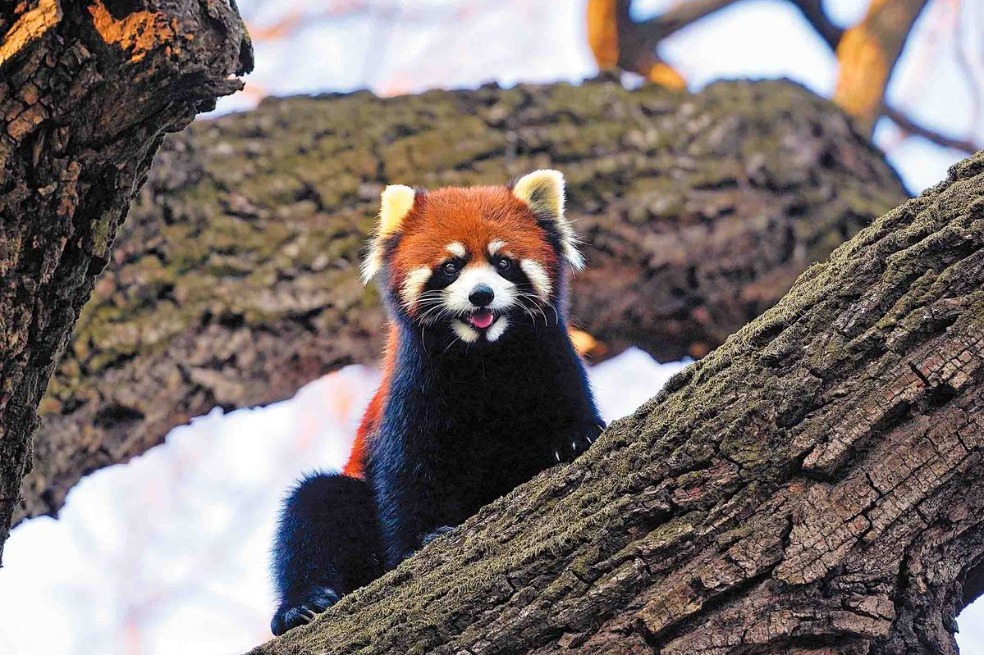
Nestled within the mountainous terrain of northern Sichuan province, Tangjiahe National Nature Reserve stands as a testament to China’s commitment to ecological preservation. At dawn, Xiao Mei, head of research and monitoring, ascends the mist-shrouded slopes carrying essential equipment for her fieldwork—a routine she has maintained for twelve years.
Established in 1978 and granted national status in 1986, this 40,000-hectare sanctuary serves as a vital conservation zone for endangered species including the giant panda, golden snub-nosed monkey, and the dove tree (Davidia involucrata)—a living fossil from the Quaternary glaciation period. The reserve also protects Fritillaria cirrhosa, a prized herb in traditional Chinese medicine.
Xiao’s journey to becoming a conservation leader was unexpected. Initially employed as a fertilizer salesperson after studying plant protection in Chengdu, she applied to Tangjiahe without fully understanding the reserve’s significance. The primitive conditions—limited infrastructure, electricity shortages, and extreme isolation—nearly drove her away within her first three days.
However, the forest itself transformed her perspective. Witnessing plants thriving in their natural rhythm and animals moving freely instilled a profound appreciation for ecological balance. This spiritual connection replaced her restlessness with scientific curiosity, leading her to analyze infrared camera footage and patrol data with renewed purpose.
Tangjiahe’s ecological success is remarkable. As a core area within the Giant Panda National Park, its subtropical forests have avoided large-scale logging and maintained minimal human disturbance. Wildlife encounter rates exceed those of many reserves, with visitors frequently spotting various species.
The panda population demonstrates exceptional stability—from 39 individuals in earlier surveys to 41 confirmed by 2025 monitoring data. Since 2016, the reserve has maintained a comprehensive DNA archive, collecting genetic samples from over 30 pandas annually to ensure accurate population tracking.
This conservation model represents more than species protection—it embodies harmonious coexistence between humanity and nature, offering valuable insights for global wildlife preservation efforts.