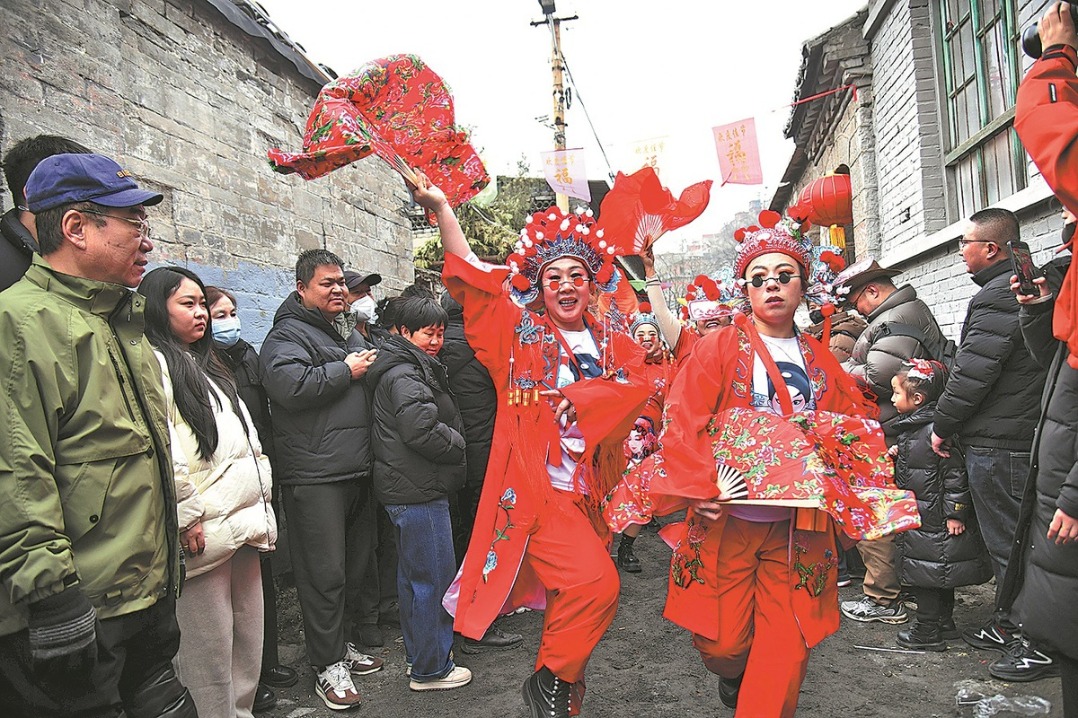
Nestled in the mountainous terrain of Shanxi province, the remote village of Xiadongzhai has captured national attention through its preservation of an extraordinary cultural tradition. The ancient practice of Paomapai—a breathtaking bareback horse-riding ceremony—has transformed this community of approximately 200 residents into a focal point of cultural heritage conservation.
On March 4th, corresponding with the sixteenth day of the first lunar month, the village erupted in vibrant celebration as participants honored the Year of the Horse through daring equestrian displays. Forty-five-year-old Dong Jinxiang, a truck driver by profession, led this year’s procession with exceptional skill, maintaining perfect balance without saddle or stirrups along ancient narrow paths that echo the region’s historical significance.
The origins of Paomapai trace back to the late Eastern Han Dynasty (25-220 AD), when the area served as a critical military corridor connecting Shanxi, Hebei, and Henan provinces. Military messengers, pressed by wartime urgency, developed the technique of riding without saddles to maximize speed and efficiency. Over centuries, this practical military necessity evolved into a cherished cultural tradition, now boasting over a millennium of continuous practice.
Recent years have brought significant recognition to this unique heritage. In 2021, Paomapai achieved designation as a national intangible cultural heritage, followed by its inclusion in UNESCO’s Representative List of the Intangible Cultural Heritage of Humanity in 2024 as part of the broader ‘Spring Festival—Chinese New Year Celebrations’ project.
The ceremony follows meticulously preserved rituals beginning with the sounding of ceremonial gongs. The first gong prompts villagers to spread ash and sand to level pathways, the second signals mounted ‘lamp officials’ to inspect the route, and the third initiates the main event. The celebration features drum troupes, yangge dancers, and traditional shehuo performers, creating an immersive cultural experience that connects contemporary participants with ancient traditions.
Dong Jinxiang, who began riding at age 14, represents the continuity of this cultural legacy. ‘This year marks my first time leading the charge,’ he remarked. ‘It means greater responsibility and improved fortune.’ His succession of previous messenger Dong Huping demonstrates the intergenerational transmission of knowledge that sustains this living heritage.
The international recognition and subsequent media attention have provided Xiadongzhai with unprecedented visibility, showcasing how ancient traditions can thrive in modern contexts while maintaining their historical authenticity and cultural significance.