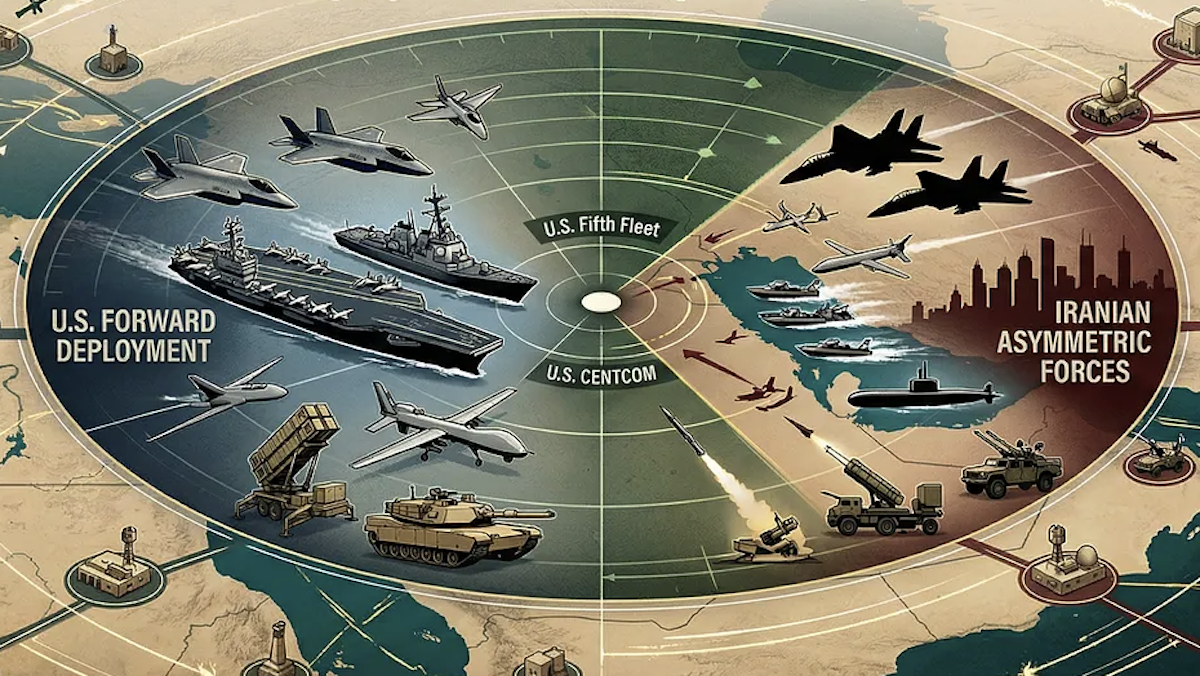
The recent escalation between the US-Israel alliance and Iran has highlighted a critical geopolitical reality: America’s extensive network of overseas military installations now stands squarely in the crosshairs of Middle Eastern conflicts. This confrontation traces its roots to a transformative journey from isolationism to global military dominance that began over a century ago.
America’s military expansion commenced following its Civil War era, marked by westward expansion and the philosophical shift toward Manifest Destiny. The pivotal Spanish-American War of 1898 served as the catalyst for overseas territorial acquisitions, establishing foundational bases in Guam, Puerto Rico, and the Philippines. Most significantly, Cuba’s Guantanamo Bay became America’s oldest continuous overseas military installation following the conflict.
The Second World War precipitated unprecedented growth in US global presence through the Destroyers-for-Bases agreement with Britain. This strategic arrangement secured 99-year leases for installations across Newfoundland, Bermuda, the Caribbean, and South America, primarily safeguarding vital trade routes including the Panama Canal and Mississippi River Delta.
Cold War geophetics dramatically accelerated base expansion, influenced by Nicholas Spykman’s Rimland Theory which advocated containing Soviet power through peripheral military presence. At its peak, the US maintained over 1,000 overseas installations through Status of Forces Agreements (SOFA) with allied nations, creating a global network that largely persists today.
The post-9/11 era witnessed renewed Middle Eastern focus with permanent installations established in Qatar (Al Udeid Air Base), Bahrain (Naval Station Bahrain), and Kuwait (Camp Arifjan). These facilities enabled power projection throughout critical regions while simultaneously creating vulnerable targets, as demonstrated by Iran’s recent retaliatory strikes against multiple US installations.
Current tensions underscore the strategic necessity and vulnerability of forward-deployed forces. While proximity enables rapid response capabilities and reduced operational limitations, it also positions personnel and assets within range of regional adversaries’ weapon systems. The recent conflict has already produced combat casualties at Kuwaiti installations, highlighting the inherent risks of forward deployment.
The architectural framework of America’s global military presence reflects evolving geopolitical strategies across three centuries. From isolationist beginnings to superpower status, these installations represent both instruments of influence and potential vulnerabilities in an increasingly volatile international landscape.