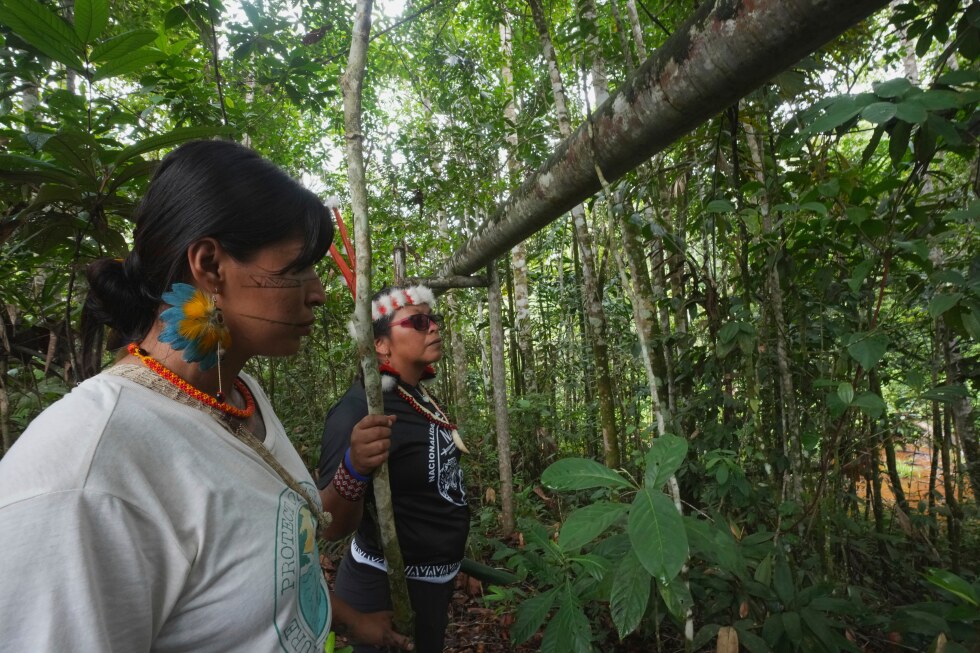
In Ecuador’s northern Amazon region, a delegation of approximately 30 Indigenous women embarked on an educational journey dubbed a ‘toxitour’ to witness the environmental consequences of decades of hydrocarbon extraction. The women, representing seven distinct Indigenous communities from across Ecuador’s Amazon basin, gathered in Nueva Loja (historically known as Lago Agrio) from March 6-8, 2026, to share experiences and document the ecological damage.
Julia Catalina Chumbi, a 76-year-old Shuar leader from Pastaza province, expressed profound dismay upon encountering oil-contaminated streams and gas flares burning above the rainforest canopy. ‘Everything is contaminated, even the air,’ she observed quietly, noting that local communities can no longer safely drink from rivers and must purchase bottled water due to pollution concerns.
The tour included visits to operational oil fields, including the Libertador field operated by state-owned Petroecuador, where participants observed polluted waterways, compromised vegetation, and absent wildlife. Salome Aranda, a 43-year-old Kichwa woman from Morete Cocha, noted that while access restrictions prevent such observations in her own territory, the tour confirmed her concerns about disappearing animals and failing crops near extraction sites.
This initiative occurred against the backdrop of Ecuador’s proposed ‘hydrocarbon road map,’ a $47 billion expansion plan that would open new Amazon regions to oil and gas development. Many proposed concessions overlap with Indigenous territories in Pastaza and Napo provinces, raising concerns about further environmental degradation and violations of Indigenous rights to free, prior, and informed consent.
Following the tour, participants developed strategies to resist potential new oil concessions in their territories. Dayuma Nango, vice president of the Association of Waorani Women, affirmed her commitment to protecting Waorani lands, stating: ‘Our forest is our mother. That’s why we protect it.’ The experience culminated in International Women’s Day demonstrations in Puyo, where participants highlighted environmental rights violations and declared their determination to resist oil expansion ‘even if it costs us our lives.’