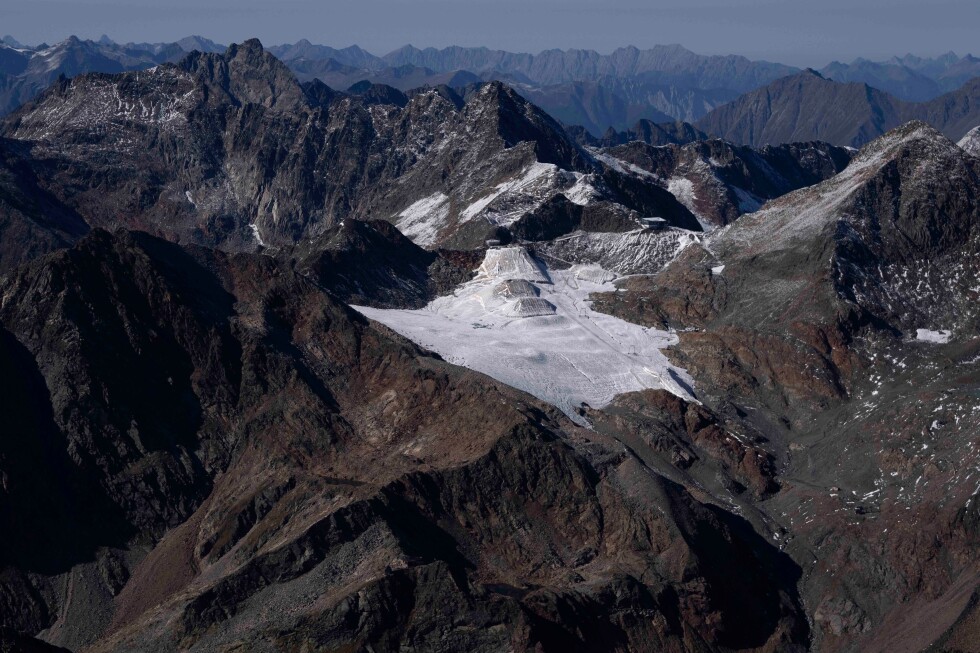
VIENNA — A comprehensive assessment by the Austrian Alpine Club has revealed a concerning environmental trend, with 94 of Austria’s 96 documented glaciers experiencing significant retreat over the past two years. This alarming development underscores the accelerating impact of climate change on the Alpine region’s fragile ecosystems.
The detailed report identifies the Alpeiner Ferner glacier in Tyrol and the Stubacher Sonnblickkees in Salzburg as the most severely affected, each having receded by over 100 meters (approximately 330 feet). The average retreat across all monitored glaciers exceeded 20 meters (65 feet), with Austria’s largest glacier, the Pasterze, demonstrating visible disintegration at its terminal tongue.
Scientific analysis attributes this dramatic glacial loss to a combination of unfavorable climatic conditions, including insufficient winter snowfall and unusually warm temperatures. Notably, June of last year registered temperatures nearly 5 degrees Celsius (9 degrees Fahrenheit) above historical averages, creating particularly adverse conditions for glacier preservation.
Nicole Slupetzky, Vice President of the Austrian Alpine Club, emphasized the growing urgency: ‘With each new measurement cycle, the evidence becomes more compelling. The critical question is no longer whether we can preserve glaciers in their historical form, but how we can effectively mitigate the consequences for our society and environment.’
The retreat of Alpine glaciers carries profound implications beyond environmental concerns, potentially affecting regional water resources, hydroelectric power generation, agricultural practices, tourism economies, and fundamental landscape characteristics. This pattern mirrors observations across global glacier systems, with neighboring Switzerland—home to Europe’s most extensive glacier network—reporting similar rates of ice loss.
The Austrian findings represent the eighth-most significant retreat recorded in the 135-year history of glacier monitoring in the country, serving as a potent indicator of climate change’s tangible effects on mountain ecosystems worldwide.