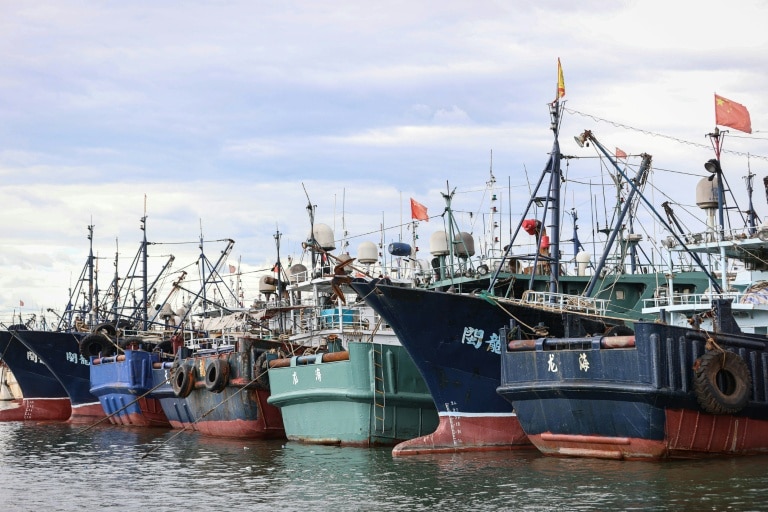
Satellite imagery and maritime tracking data have revealed extraordinary coordinated movements by China’s fishing fleet in the East China Sea, raising alarms among international security experts. Between December 2023 and January 2024, approximately 2,000 vessels assembled in precise geometric patterns northeast of Taiwan, maintaining formations for extended periods despite adverse weather conditions.
According to analysis by ingeniSPACE and verification from multiple maritime intelligence organizations, the vessels formed two parallel inverted L-shapes stretching approximately 400 kilometers during the December 25 event. Subsequent formations in early January included an uneven rectangular cluster of about 1,000 boats in the same strategic waters.
Maritime experts unanimously agree these formations serve no commercial fishing purpose. Instead, they represent what analysts describe as a demonstration of China’s ability to mobilize civilian vessels for potential military operations. Gregory Poling of the Center for Strategic and International Studies noted the unprecedented scale of these gatherings, stating he had “never seen a massing of Chinese fishing boats in these numbers anywhere outside of port ever.”
The vessels are believed to belong to China’s maritime militia – a civilian fleet trained to support military operations. Their coordinated movements suggest advanced preparation for potential regional contingencies, including scenarios involving Taiwan or Japan. Thomas Shugart, a former U.S. Navy submarine warfare officer, characterized the operation as clearly state-directed, noting that no commercial entity controls such a large number of vessels.
This development occurs against the backdrop of China’s stated military modernization goals and increasing pressure on Taiwan. The U.S. Department of Defense has previously indicated that China expects to achieve capability to conduct a successful military operation against Taiwan by 2027. The fishing fleet’s unusual formations appear consistent with these preparations, demonstrating China’s ability to potentially use civilian vessels for blockades, harassment operations, or as decoys in conflict scenarios.
Japan’s coast guard declined to comment on the developments, while China has not publicly addressed the unusual vessel formations. The incidents highlight growing concerns about China’s gray zone tactics – coercive actions that fall short of open warfare but significantly impact regional security dynamics.