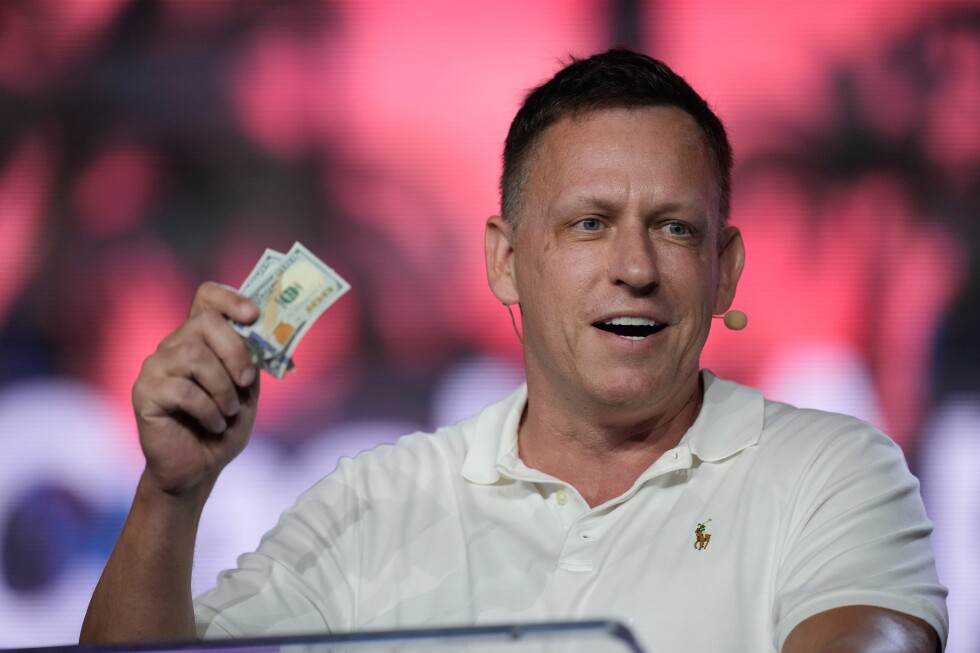
ROME — Silicon Valley mogul Peter Thiel has generated intense controversy with his private lecture series on the Antichrist, hosted near Vatican City this week. The four-part conference, running from Sunday to Wednesday, became so contentious that multiple Catholic institutions have publicly distanced themselves from the event.
Thiel, co-founder of PayPal and data analytics firm Palantir, has long demonstrated fascination with apocalyptic themes. The billionaire, an early supporter of Vice President JD Vance’s political career, previously explored these concepts in a November essay for Catholic magazine First Things, where he pondered: ‘Christians debated these prophecies for millennia. Who was the Antichrist? When would he arrive? What would he preach?’
Initial reports suggested the lectures would occur at Pontifical St. Thomas Aquinas University (Angelicum), Pope Leo XIV’s alma mater. However, the institution issued a formal denial: ‘We would like to clarify that this event is not organized by the University, will not take place at the Angelicum, and is not part of any of our institutional initiatives.’
Organizational responsibility now appears divided between Italy’s Vincenzo Gioberti Cultural Association and Washington’s Cluny Institute at Catholic University of America. While the Gioberti group confirmed participation, CUA representatives emphasized that the Cluny Project operates as ‘an independent initiative incubated at the university.’
Thiel’s lectures mirror a similar series delivered in San Francisco last September, examining the Antichrist through interdisciplinary lenses including technology, theology, and political philosophy. The tech billionaire approaches the concept as a framework for understanding humanity’s existential challenges, drawing from thinkers including René Girard and Carl Schmitt.
The controversy extends beyond theological circles given Thiel’s political connections. His company Palantir maintains contracts with U.S. Immigration and Customs Enforcement, while his protege JD Vance recently faced theological criticism from Pope Francis regarding immigration policies. Months before his papacy, Pope Leo XIV shared an article criticizing Vance’s interpretation of Christian love hierarchies, creating ongoing tension between Vatican doctrine and Thiel’s intellectual circle.