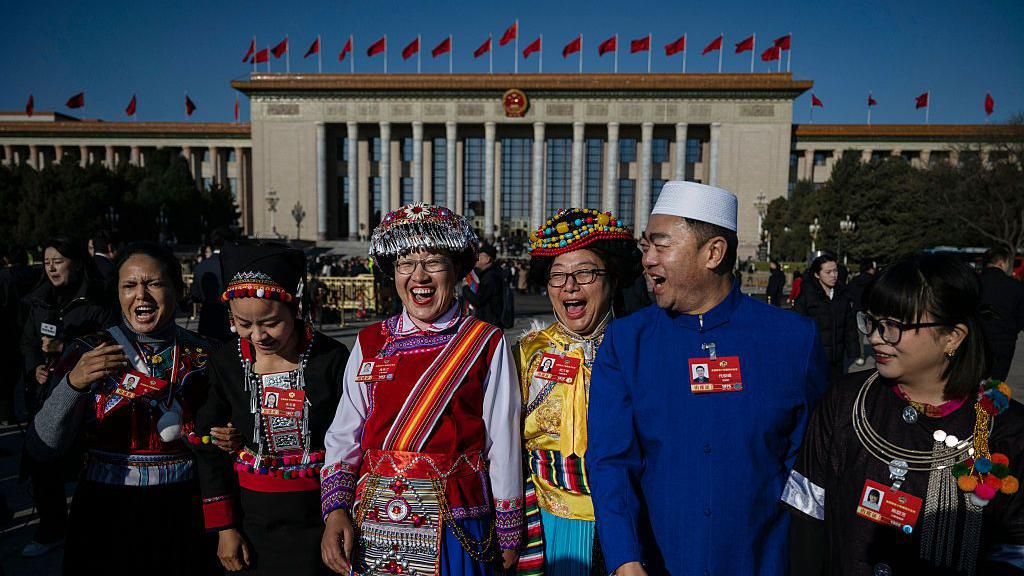
China’s National People’s Congress has enacted a comprehensive new legislation titled the ‘Law on Promoting Ethnic Unity and Progress,’ generating significant debate regarding its implications for the country’s 55 recognized minority groups. The legislation, passed during the annual parliamentary session, mandates Mandarin Chinese as the primary language of instruction from preschool through secondary education, displacing previous policies that allowed curriculum delivery in native languages including Tibetan, Uyghur, and Mongolian.
Officially presented as a measure to foster national integration and improve economic opportunities, the law establishes legal frameworks for creating ‘mutually embedded community environments’ and permits prosecution of parents or guardians who instill views deemed detrimental to ethnic harmony. Government representatives argue that standardized Mandarin education enhances employment prospects and facilitates modernization efforts.
Academic experts express profound concerns regarding the legislation’s cultural implications. Magnus Fiskesjö, Cornell University anthropology professor, characterizes the law as representing ‘a dramatic recent policy shift to suppress the ethnic diversity formally recognized since 1949,’ potentially forcing minority children to ‘forget their own language and culture.’
The legislation formalizes existing assimilation policies, notably the ‘sinicization’ initiative launched in the late 2000s to create a unified national identity centered on Han Chinese culture, which comprises over 90% of China’s 1.4 billion population. The move follows documented tensions in minority regions, including rare 2020 protests by ethnic Mongolians against language education changes and ongoing international criticism regarding treatment of Uyghur Muslims in Xinjiang.
Professor Allen Carlson of Cornell University interprets the law as clarifying ‘that non-Han peoples must do more to integrate themselves with the Han majority and above all else be loyal to Beijing.’ National University of Singapore’s Ian Chong suggests the development-focused rhetoric implicitly frames minority languages and cultures as ‘backward and impediments to advancement.’
The legislation emerges against a backdrop of increased state control in minority regions, including monastery regulations in Tibet and extensive re-education camp systems in Xinjiang that have drawn United Nations accusations of grave human rights violations. Chinese authorities maintain these measures ensure stability and development while preserving constitutional ethnic rights, though critics argue they systematically diminish cultural autonomy.