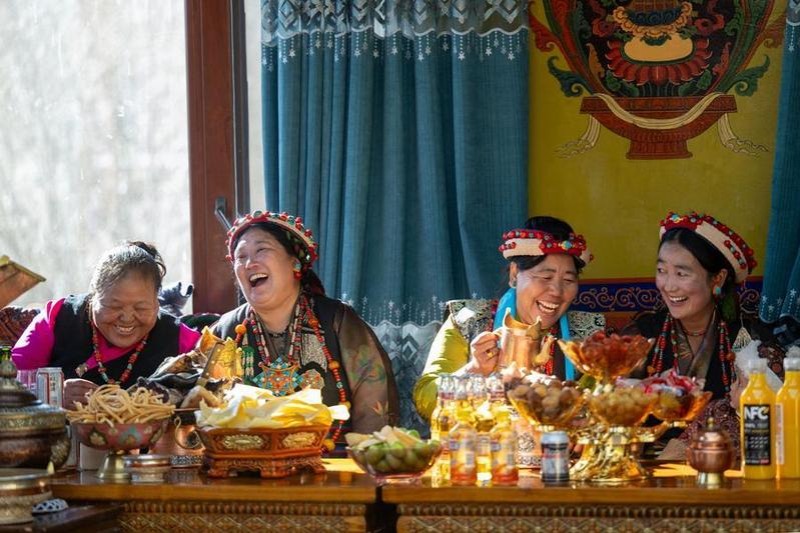
In a significant push to safeguard intangible cultural heritage, China’s Tibet Autonomous Region has amplified efforts to preserve the languages and traditions of its smallest ethnic populations. These initiatives aim to ensure the transmission of unique cultural identities to younger generations amid modernization.
Tashi Gyaltsen, the sole National People’s Congress deputy representing the Lhoba ethnic group, revealed comprehensive measures being implemented in Doyu Lhoba autonomous township. With approximately 4,300 members, the Lhoba people possess only a spoken language without written script, making oral transmission particularly vulnerable. “The local government funds Lhoba language courses in schools and supports regular night classes where elders teach and youth actively participate,” Gyaltsen stated.
The preservation campaign gained formal momentum in 2019 when Gyaltsen submitted a proposal during the 13th NPC session. Subsequently, county-level authorities allocated over 8 million yuan ($1.2 million) to revitalize Lhoba heritage, encompassing language, history, traditional crafts, songs, dances, clothing, and architecture. A renovated Lhoba Ethnic History Museum now serves as a cultural showcase, featuring exhibits from migration patterns to textile techniques.
Parallel developments emerge in Metog county, where Norbu Yangzom, the only NPC deputy from the Monba ethnic group, reported successful cultural-tourism integration. With about 8,500 Monba people among the county’s 15,300 residents, traditional elements like attire and folk dances have been transformed into experiential products. Villages have established clothing factories and costume shops revitalizing textile techniques, while chefs have standardized eleven distinctive Monba dishes for culinary tourism.
These efforts align with China’s draft law on promoting ethnic unity, which emphasizes protecting minority languages and supporting their “standardization, normalization and informationization.”
The cultural preservation has yielded tangible economic benefits. Metog, once isolated until its first paved road connection in 2013, welcomed over 700,000 visitors in 2025, generating approximately 470 million yuan in tourism revenue. Yangzom attributes this transformation to sustained rural revitalization policies rather than coincidence.
Both deputies emphasize that cultural preservation extends beyond museum conservation, seeking instead to integrate traditions into contemporary life through education, economic activity, and daily practice.