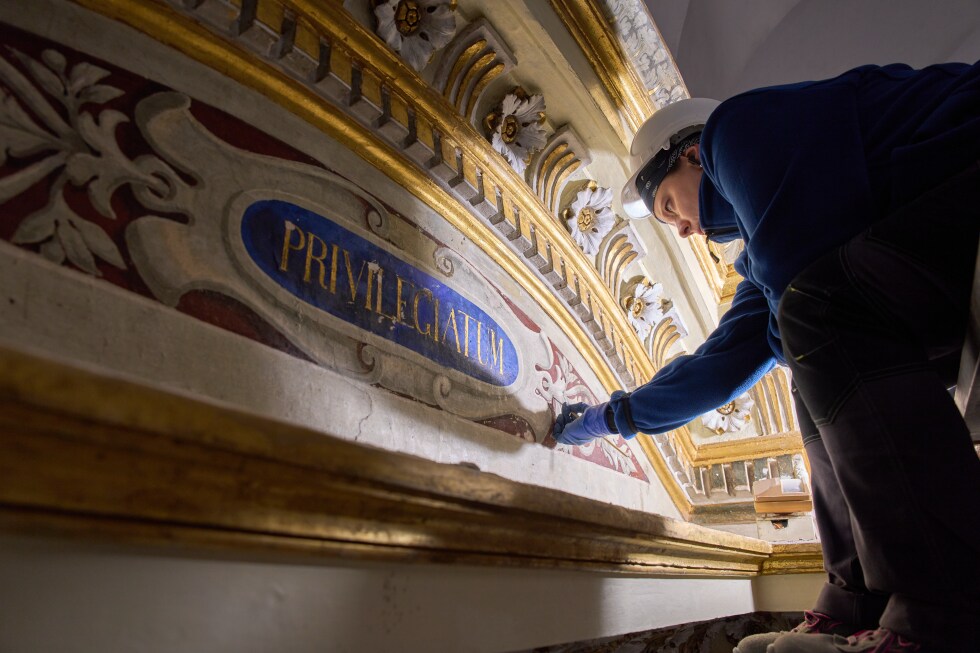
ROME — While Michelangelo’s monumental Moses sculpture has long drawn visitors to the Basilica of San Pietro in Vincoli, a remarkable transformation is now unfolding within its hallowed halls. A substantial infusion of European Union pandemic recovery funding has ignited an ambitious restoration campaign, bringing to light centuries-old artistic treasures that have languished in obscurity.
High above the basilica floor, restorer Melanie Khanthajan works with surgical precision at a dizzying 20-meter (65-foot) elevation. Armed with specialized tools, she meticulously executes the delicate ‘descialbo’ technique—carefully removing layers of accumulated plaster to reveal serpentine decorations surrounding a historically significant coat of arms. ‘Each layer removal presents new discoveries,’ Khanthajan reflects from her scaffolding perch. ‘It’s an ongoing revelation that continually surprises and delights our team.’
The comprehensive restoration encompasses the basilica’s ceilings, altar, tombs, marble columns, and decorative elements through a €2 million ($2.3 million) EU grant. This investment supports eleven dedicated restorers working at an accelerated pace to meet the 2026 funding deadline. The project forms part of Rome’s broader ‘Caput Mundi’ initiative, which allocated €500 million ($579 million) for over 100 cultural renovations throughout the Eternal City.
Built during the 5th century under the Eastern Roman Empire and later reconstructed under Pope Julius II in the 16th century, the basilica derives its name (‘vincoli’ meaning chains) from the revered relics contained within its altar—chains traditionally believed to have bound St. Peter in Jerusalem that miraculously fused with those from his Roman imprisonment.
The current restoration focuses particularly on the Della Rovere family coat of arms, featuring a distinctive oak tree motif that Pope Julius II incorporated throughout the church’s ceilings, arches, and chapels. While Michelangelo’s iconic Moses remains untouched for now, the masterpiece will receive careful cleaning upon project completion.
Ilaria Sgarbozza, scientific director of the restoration project, notes the extraordinary timeline: ‘Work commenced approximately eight months ago and will conclude by May 2026—a remarkably accelerated schedule that demonstrates our commitment to preserving this cultural heritage.’ The project represents both a technical achievement in art conservation and a symbolic rebirth of historical treasures through strategic EU investment.