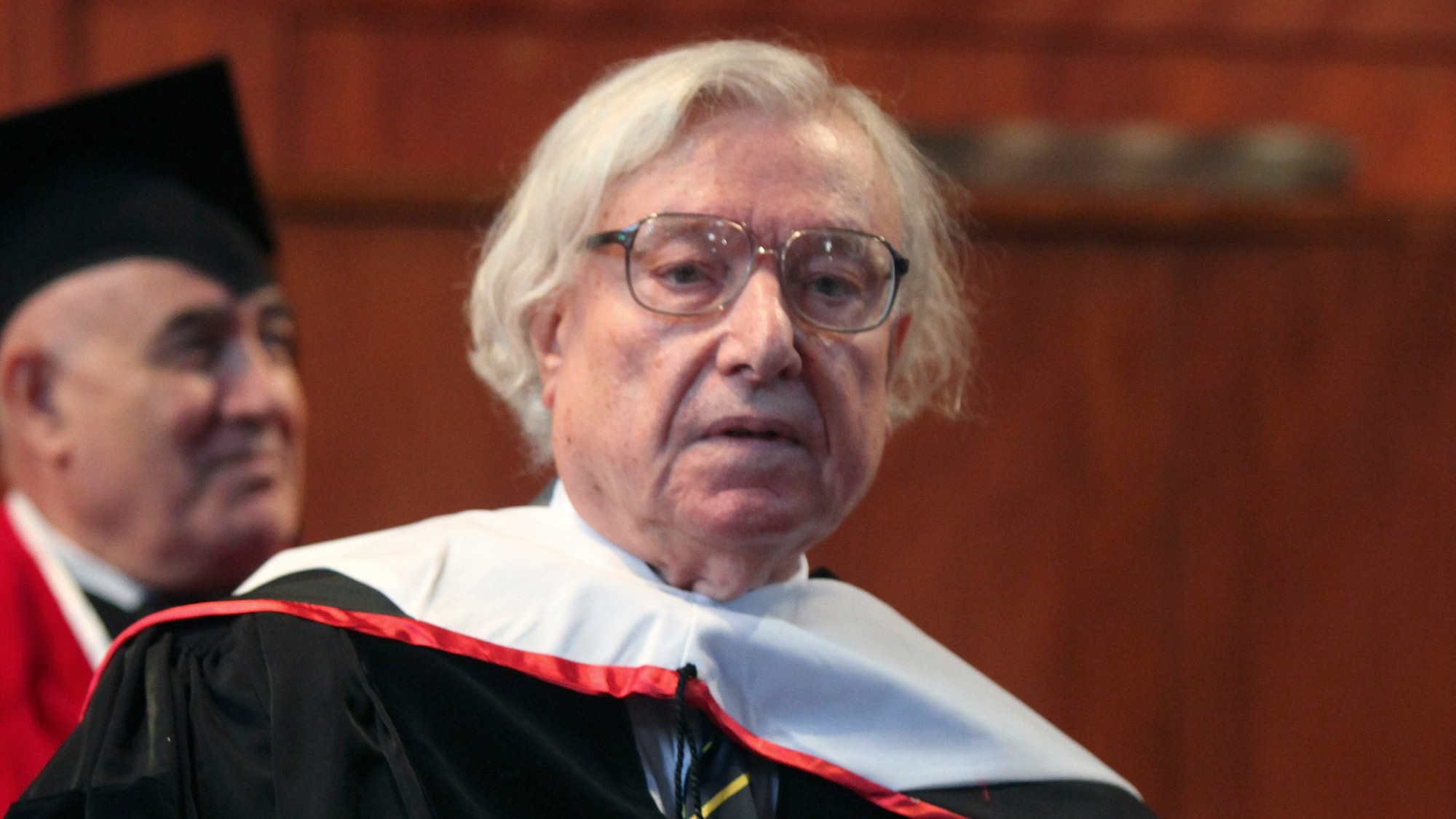
Walid Khalidi, the preeminent Palestinian historian whose seminal scholarship documented the displacement and historical narrative of the Palestinian people, has passed away at the age of 100. His death was confirmed by the Institute for Palestine Studies (IPS), the Beirut-based research center he co-founded in 1963, which announced he died on Sunday in Cambridge, Massachusetts.
Khalidi’s life’s work was dedicated to meticulously chronicling Palestinian society before and after the Nakba—the ‘catastrophe’ of 1948 that saw the violent displacement of hundreds of thousands of Palestinians to facilitate the creation of the state of Israel. He earned the moniker ‘the historian of the Palestinian cause’ through his rigorous academic contributions, which included translating and analyzing the diaries of key Israeli figures like first Prime Minister David Ben-Gurion and Foreign Minister Moshe Sharett.
Under his stewardship, the IPS became an indispensable resource, producing critical studies and translations between Hebrew, Arabic, and English. Among its most significant publications was a detailed examination of the Haganah, the Zionist paramilitary force central to the 1948 events. Khalidi’s research was instrumental in bringing to light previously concealed strategic plans, such as Plan Dalet, which outlined the systematic occupation and depopulation of Palestinian villages.
His encyclopedic collections, including the photographic archive ‘Before Their Diaspora’ and the comprehensive volume ‘All That Remains,’ serve as rare visual and historical records of a vanished pre-1948 Palestine. Born into an academic family in Jerusalem in 1925, Khalidi’s own career was distinguished. He taught at the University of Oxford until resigning in protest over the 1956 Suez Crisis, later becoming a professor at the American University of Beirut until 1982, and finally a research fellow at Harvard University.
Blending scholarship with political advocacy, Khalidi maintained associations with several Palestinian political movements and formally represented Palestinian interests on the international stage, including in the Arab League and at the 1991 Middle East peace talks in Washington. A lifelong proponent of a two-state solution, he articulated it in a 1988 Foreign Affairs article as the only viable framework for a historical compromise in the enduring conflict.