Cutting through the rugged terrain of northern China’s Taihang Mountains, a remarkable railway service continues to bridge communities while defying modern transportation trends. Operated by China Railway Taiyuan Group, the 8818/8817 public welfare train has served as an essential lifeline for remote villages since its inauguration in 1991.
This 305-kilometer journey connects Taiyuan Station with Lingqiu Station, traversing the landscape at a deliberate pace of under 45 kilometers per hour. The seven-and-a-half-hour voyage offers unparalleled affordability, with fares ranging from just 4 yuan (approximately $0.58) to 34.5 yuan for the complete route. The train’s strategic placement of stops directly at village thresholds has made it an indispensable resource for mountain communities.
The service, affectionately dubbed ‘The Train of Happiness,’ has fundamentally transformed mobility for residents like 71-year-old Liu Ronghua from Lingqiu county. Having contributed to the railway’s construction in his youth, Liu now benefits from the connectivity it provides. ‘This public service train enables us to transcend mountain barriers and experience the wider world,’ he remarked.
Beyond mere transportation, the train has catalyzed life-changing opportunities. Sun Zhibin, an educator at Lingqiu No. 7 Middle School, attributes his personal and professional trajectory to the railway. In 2002, a 19.5-yuan ticket—painstakingly saved from his father’s modest income—facilitated his journey to Taiyuan for education. That fateful trip not only launched his academic career but also led to meeting his future wife. Today, Sun revisits the route with his children, sharing his educational heritage.
The train regularly transports students like Sun Nan, a graduate researcher at Shanxi Agricultural University, who carries agricultural technology materials between campus and hometown. His livestock research has dramatically improved sheep breeding outcomes, doubling local survival rates and significantly boosting family incomes.
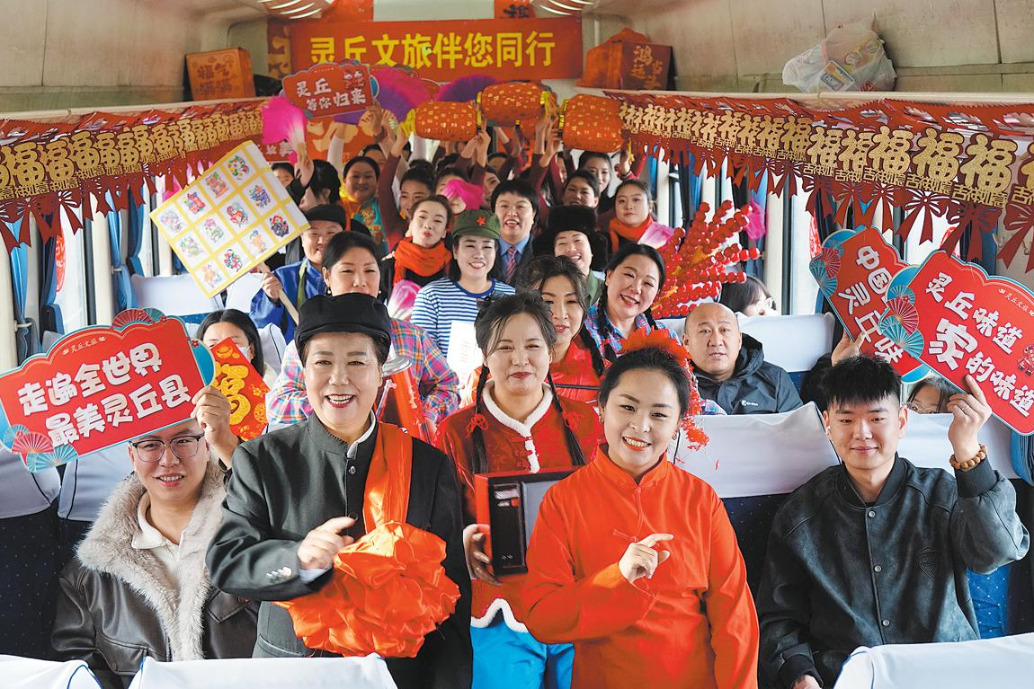
Cultural enrichment accompanies practical transportation, with folk art troupes periodically performing for passengers. The route winds past historical landmarks including Yanmen Pass and Mount Wutai, blending cultural preservation with contemporary mobility needs. As China advances with high-speed rail networks, this deliberate connection between historical significance and modern accessibility continues to serve as a vital artery for mountain communities.