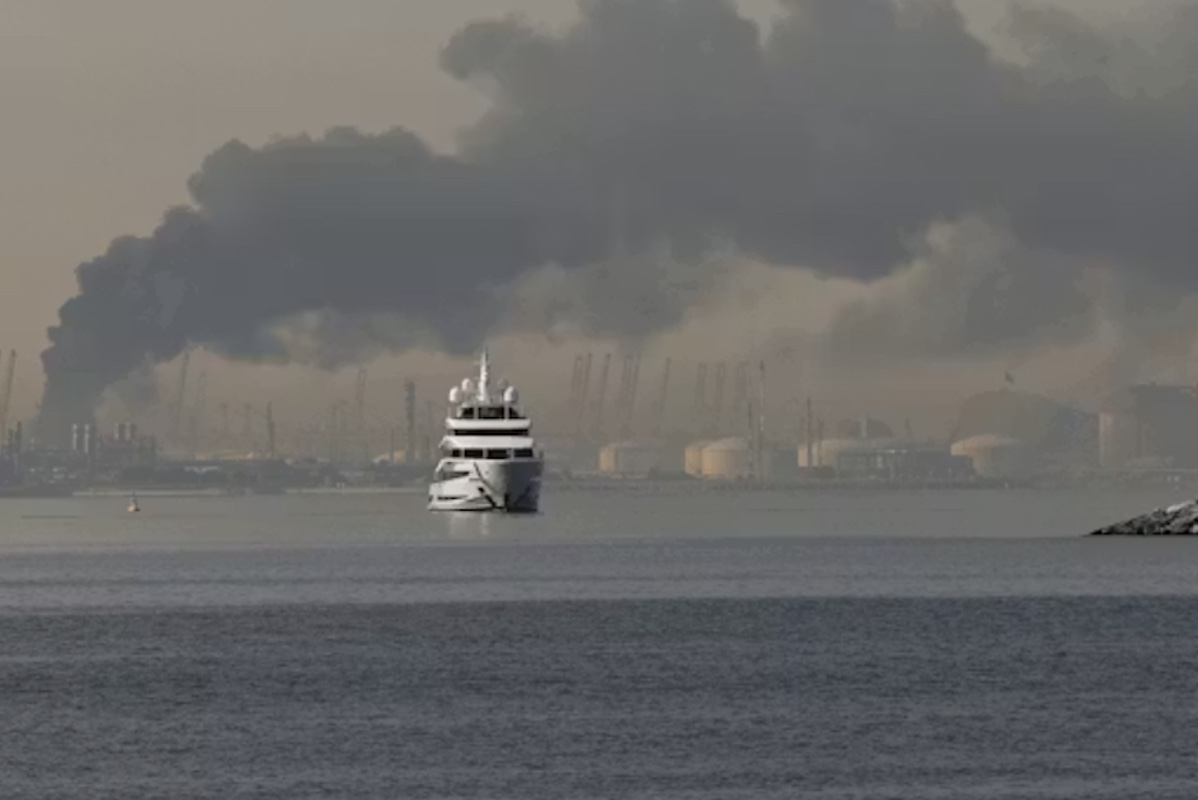
Persian Gulf allies of the United States now confront a scenario they had meticulously avoided—becoming primary targets in a rapidly expanding Middle Eastern conflict. All six Gulf Cooperation Council nations (Bahrain, Kuwait, Oman, Qatar, Saudi Arabia, and the UAE) have experienced retaliatory strikes from Iran following joint U.S.-Israeli military operations dubbed “Operation Epic Fury.”
Unlike previous limited engagements, Iran’s current campaign represents a dramatic escalation in both scale and strategy. Military installations across the region have been struck alongside deliberate targeting of civilian infrastructure including international airports, commercial ports, and luxury hotels. This shift marks a departure from Tehran’s comparatively restrained response during the June 2025 conflict, when it limited strikes to a single Qatari military base after providing advance warning.
Regional experts interpret Iran’s aggressive posture as that of a cornered regime fighting for survival. The Islamic Republic, lacking capability to strike the U.S. mainland directly, has turned to targeting American military assets concentrated throughout the Gulf region. Iranian forces have launched approximately 390 ballistic missiles and 830 drones toward Gulf states in the conflict’s initial phase alone—far exceeding the 14 missiles deployed in last year’s solitary strike on Qatar’s Al-Udeid air base.
While Gulf air defense systems have successfully intercepted most projectiles, the psychological impact on these carefully cultivated hubs of global commerce may prove more damaging than physical destruction. Cities like Dubai, Abu Dhabi, and Doha have built their international reputations as oases of stability and security—an image now severely compromised by sustained attacks.
The economic consequences are already materializing through closed airspaces creating the largest disruption to global travel since COVID-19, interrupted shipping through the critical Strait of Hormuz, and rising oil prices. Particularly concerning for regional leaders is the potential targeting of desalination plants that provide fresh water to these arid nations.
Iran’s strategy appears calculated to pressure Gulf governments into lobbying Washington for conflict resolution. However, this approach risks backfiring by driving regional partners closer to the United States after a period of diplomatic distancing. The situation represents the most significant regional peril since the 1990-91 Gulf War, with implications extending far beyond the Middle East.