The partial reopening of Gaza’s Rafah border crossing last month offered a fleeting glimpse of hope for critically ill patients. Yet for seven-year-old Anwar al-Ashi, this reprieve came too late. He succumbed to metabolic acidosis while awaiting permission to exit for urgent medical treatment—a casualty of what medical professionals describe as a catastrophic healthcare collapse exacerbated by prolonged border closures and Israel’s comprehensive siege.
Anwar’s father, Nayef al-Ashi, recounted to Middle East Eye how his son’s condition deteriorated dramatically due to malnutrition and contaminated water sources. “This episode was directly caused by malnutrition and unsafe drinking water,” he stated. “Repeated displacement during conflict weakened his resilience, but the absence of basic necessities proved fatal.”
Medical authorities confirmed that nutritional deficiencies disrupted Anwar’s pH balance, resulting in critically elevated blood acidity that precipitated kidney failure. Despite emergency dialysis and intensive care, the absence of essential medications and diagnostic equipment sealed his fate. “We watched helplessly as his organs failed sequentially—first his liver, then his brain,” Nayef lamented. “The necessary resources simply weren’t available in Gaza.”
Tragically, Anwar represents one of 1,360 patients who have died while awaiting medical evacuation since Israel’s closure of the Rafah crossing in May 2024. Current estimates indicate over 18,500 individuals—including 4,000 children—require urgent medical transfers, yet only approximately 260 patients were permitted to cross during the border’s brief operational period from February 2-18.
The healthcare crisis extends far beyond individual cases. By December, 321 essential medicines were completely depleted in Gaza, with 710 medical consumables unavailable. Systematic targeting of medical infrastructure has destroyed dozens of hospitals, while the deliberate restriction of supplies has created insurmountable treatment barriers.
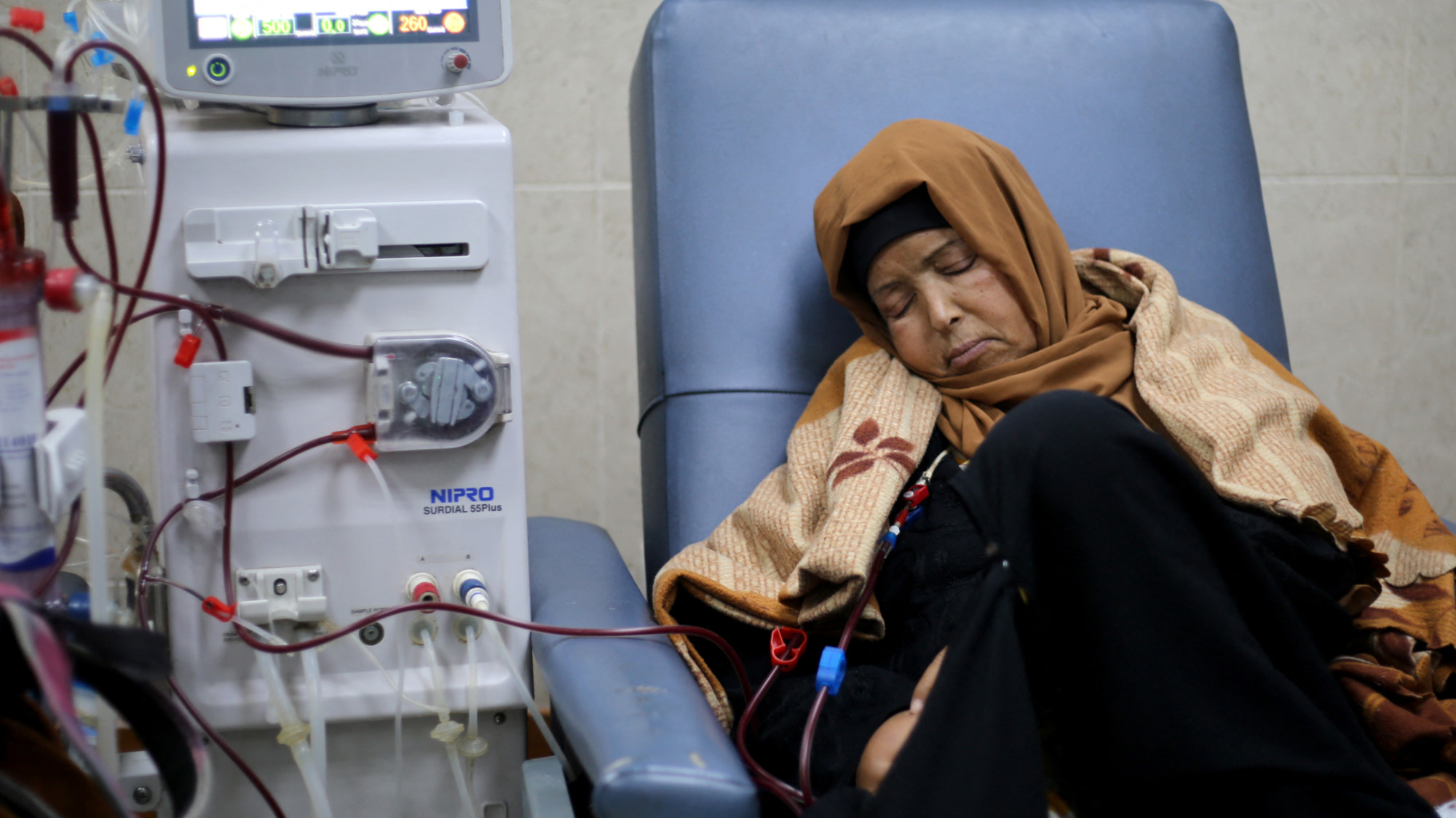
Renal patients face particularly dire circumstances. Dr. Ghazi al-Yazji, head of dialysis at al-Shifa hospital, reports a 41% increase in mortality among kidney patients since the conflict began. “Most dialysis units were destroyed or became non-functional,” he explained. “Even with partial restoration of services, we lack sufficient machines and chairs to meet demand.”
Cancer patients confront similarly bleak prospects. Warda al-Batrikhi has sought cancer screening for her 14-year-old son for 18 months without success. “Priority is given to already-diagnosed patients,” she noted. “We move between hospitals knowing it’s futile—proper treatment exists only outside Gaza.”
Approximately 4,000 cancer patients hold official referrals for external treatment but remain trapped by border policies. An estimated 11,000 oncology patients lack access to specialized diagnostics or therapies, creating a hidden health timebomb within the territory.
The recent border closure following US-Israel military actions against Iran has further compounded the crisis, leaving thousands of critically ill patients in limbo. Medical professionals describe the situation as a systematic dismantling of healthcare infrastructure that violates international humanitarian standards and constitutes a severe public health emergency.