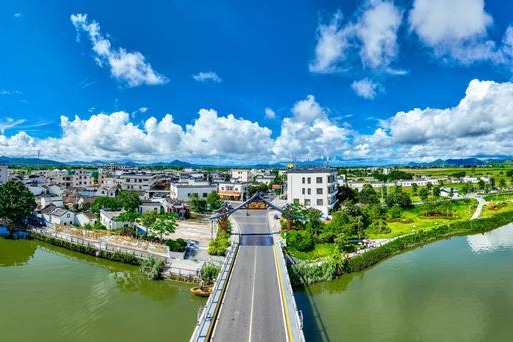
As developed capitalist nations grapple with widening income disparities and social security strains, China is advancing its distinctive socialist approach to addressing these global challenges through its forthcoming 15th Five-Year Plan. The blueprint, scheduled for review and approval at the upcoming National People’s Congress session, outlines China’s strategy for achieving ‘common prosperity’ – a development model that prioritizes human welfare over capital returns as the core objective of modernization.
Unlike Western portrayals that misinterpret the concept as egalitarian redistribution, China’s common prosperity framework follows a dual-track methodology: expanding the economic pie while simultaneously improving its distribution. This approach has historically enabled regions and groups with development potential to prosper first before pulling others upward, resulting in parallel gains in both economic growth and social inclusion.
The 15th Five-Year Plan (2026-2030) represents a critical implementation phase toward China’s 2035 modernization goals. Building on the milestone achievement of eradicating absolute poverty in 2021, the new blueprint emphasizes several key policy directions:
Employment stands as the cornerstone strategy, with ‘high-quality, full employment’ taking center stage alongside vocational skill development across all age groups. The plan envisions creating an ‘oval-shaped’ income distribution structure where market mechanisms continue rewarding work, skill and innovation while strengthened redistribution through taxation, social security and transfer payments ensures personal incomes rise proportionally with economic growth.
Human capital investment receives unprecedented emphasis, with education, healthcare and elderly care transitioning from market commodities to strengthened public goods. Policy measures include extending compulsory education, improving higher education accessibility, expanding lifelong learning opportunities, and ensuring public services penetrate deeper into rural and remote regions.
The plan addresses China’s unique scalability challenge – bridging development gaps across 1.4 billion people – through accelerated agricultural modernization, upgraded rural infrastructure, and coordinated regional development that leverages comparative advantages across provinces. Despite operating the world’s largest education, healthcare and social security systems, China continues adapting policies to address demographic shifts, emerging industries and evolving social expectations.
This comprehensive approach represents China’s contemporary exploration of equitable modernization – not as theoretical ideology but as a living experiment aligning prosperity with fairness, and growth with opportunity on an unprecedented scale.