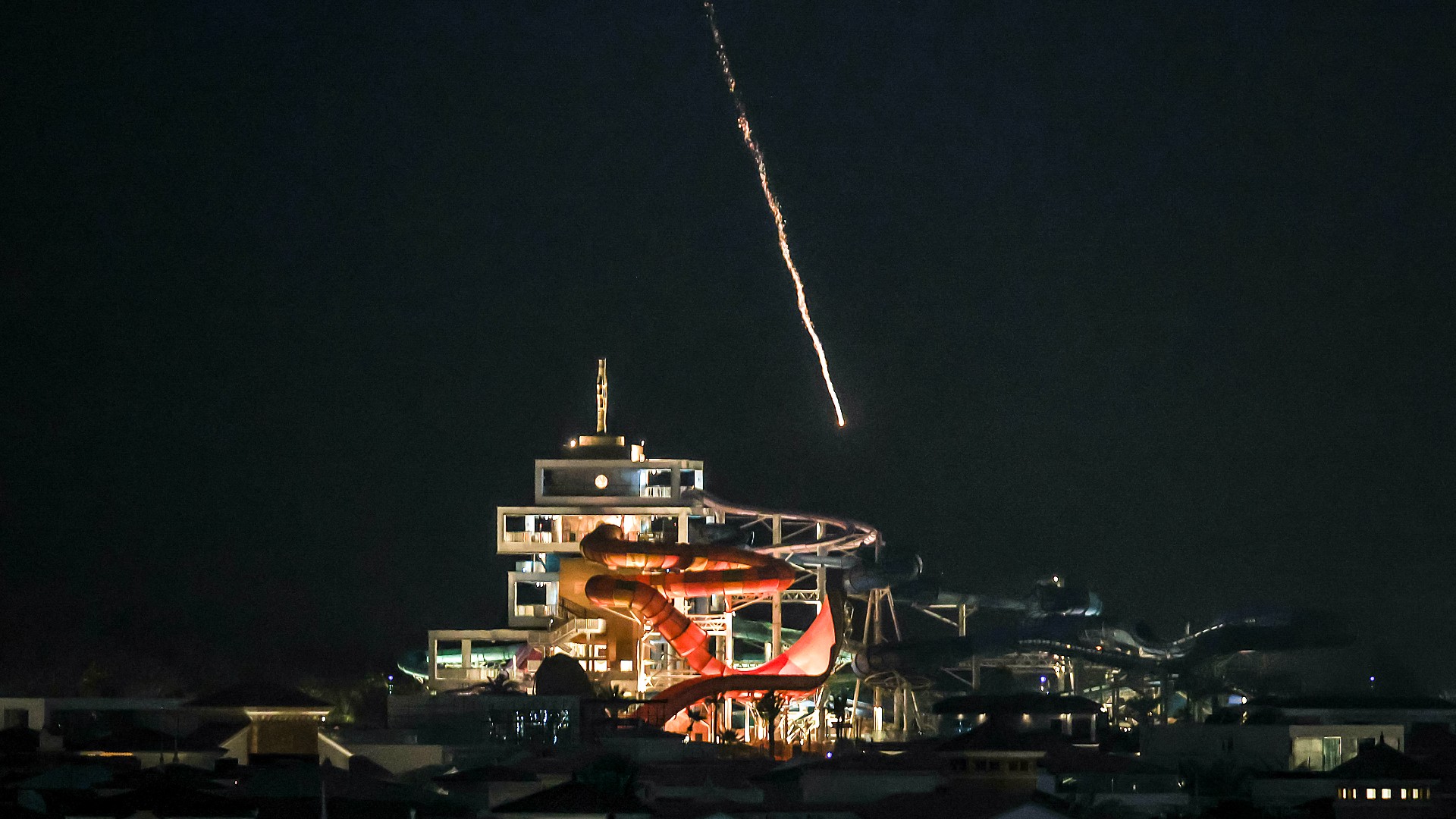
In a significant escalation of regional hostilities, Iran has launched comprehensive military strikes across the Middle East in retaliation against the United States and Israel. The offensive, which targeted both military installations and economic infrastructure, demonstrates Tehran’s multifaceted approach to asymmetric warfare.
The campaign has seen unprecedented missile and drone deployments against multiple Gulf states, including critical oil and gas facilities in Saudi Arabia and Qatar. Beyond punitive measures for the killing of Iranian leadership and civilians, these attacks strategically target the economic foundations of nations perceived as U.S. allies. Particularly significant is the targeting of the Strait of Hormuz, a vital global energy transit corridor.
Military analysts reveal the sophisticated economic dimension of Iran’s strategy. According to data compiled by defense experts, Iran launched 165 ballistic missiles, two cruise missiles, and 541 drones against the UAE alone by Sunday. While Emirati defenses achieved an extraordinary 92% interception rate, the financial asymmetry reveals Tehran’s strategic calculus.
Kelly Grieco of the Stimson Center notes the devastating economic imbalance: For every dollar Iran spends on drones, the UAE expends approximately $20-28 intercepting them. Grieco estimates Iran’s total offensive expenditure between $177 million and $360 million, while defense costs for the UAE reached between $1.45 billion and $2.28 billion—creating a five to tenfold financial disadvantage for defending nations.
This strategy of financial attrition mirrors Russian tactics in Ukraine, where inexpensive Iranian-designed Shahed drones (now mass-produced with Chinese components) overwhelm expensive defense systems. The technological disparity has been likened by Economist correspondent Gregg Carlstrom to ‘using Ferraris to intercept e-bikes.’
The sustainability of current defense postures remains uncertain. Regional powers including Saudi Arabia maintain sophisticated multi-layered defense networks incorporating American, European, and Chinese systems. Saudi Arabia remains the only Gulf state deploying Chinese Silent Hunter laser systems specifically designed for low-cost drone interception.
Meanwhile, the United States faces its own logistical challenges, rapidly expending Tomahawk cruise missiles and aircraft-launched weapons while working to replenish stocks of Patriot, Standard Missile, and Thaad interceptors. Current conflicts have already depleted air defense inventories throughout the Middle East, raising concerns about long-term defensive capabilities against sustained asymmetric attacks.