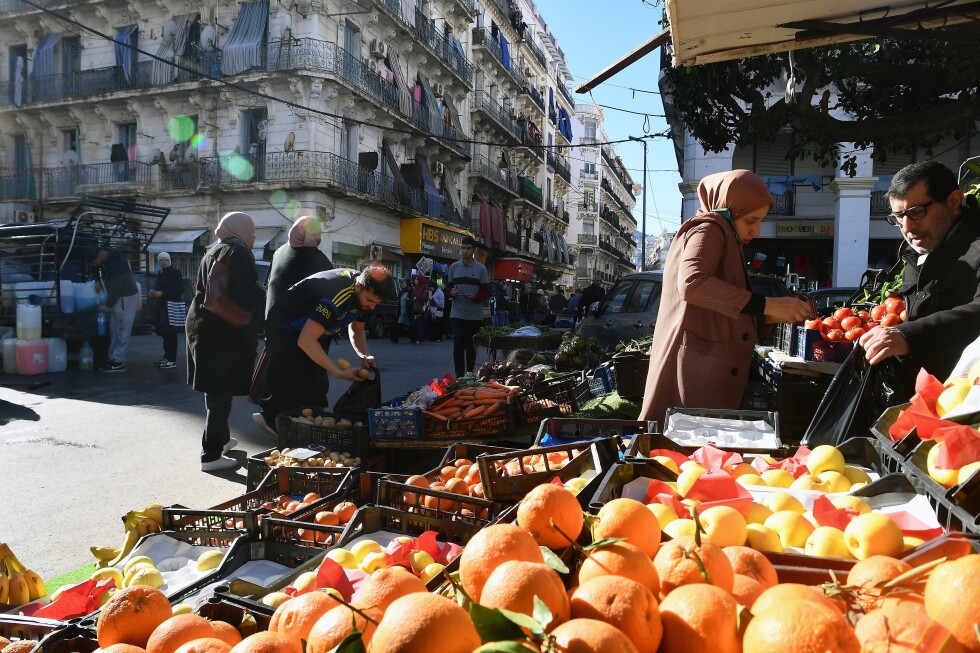
ALGIERS, Algeria — The sacred month of Ramadan, traditionally marked by spiritual reflection and communal feasting, has become a period of financial anxiety for many Algerians grappling with severe economic pressures. Despite Algeria’s substantial oil and gas reserves, declining purchasing power has pushed numerous families below the poverty line, transforming what should be a time of celebration into one of calculation and sacrifice.
At Algiers’ bustling Clauzel market, the commercial epicenter of the capital, stalls overflow with vibrant fruits and vegetables artfully displayed. Yet beneath this appearance of abundance lies a harsh reality: essential food items have experienced dramatic price surges. Onions doubled from 45 to 100 dinars (approximately $0.35 to $0.77) per kilogram within days, while carrots reached 150 dinars, peppers 200 dinars, and green beans an astonishing 550 dinars per kilogram.
The situation has created tense confrontations between vendors and consumers, with occasional eruptions of violence in marketplaces. Ahmed Messai, a retired railway worker, reflects on the stark contrast: “In the 1970s, we didn’t earn much, but we could stock up for Ramadan and afford fresh meat, fruit, and vegetables.”
President Abdelmadjid Tebboune’s administration has attempted to address the crisis through measures including the importation of 144,000 sheep and 46,000 cattle to improve meat accessibility. However, even with government intervention, locally sourced mutton from the High Plateaus and cattle from the Kabyle mountains remain prohibitively expensive for middle-income professionals.
The growing economic distress has catalyzed a remarkable solidarity movement. Restaurant owners across the country have converted their establishments into “mercy restaurants” serving free meals to those in need. The Algerian Red Crescent operates one of the largest such initiatives in Algiers, serving up to 800 meals daily in a massive tented community space.
Academic Hocine Zairar notes that while these efforts demonstrate “solidarity and civic awareness,” their proliferation signals a troubling societal shift: “Poverty is gaining ground in our country.” Indeed, mercy restaurants—once frequented primarily by singles, homeless individuals, and travelers—now regularly serve entire families.
President Tebboune acknowledged the profound economic transformation during a recent television interview, stating that “the middle class, once the pride of Algeria, is now being decimated by the crisis.” His administration has promised wage increases, raised the minimum wage from 20,000 to 24,000 dinars, and increased retirement pensions by 5-10%.
According to Professor Redouane Boudjema of the Institute of Journalism in Algiers, these Ramadan assistance measures represent a governmental effort to maintain “social peace” and mitigate political discontent arising from restrictions on civil and trade union freedoms. With the average Algerian salary equivalent to approximately $330 officially (and less than $235 on the informal market), the economic challenges extend far beyond the holy month, threatening the nation’s social fabric.