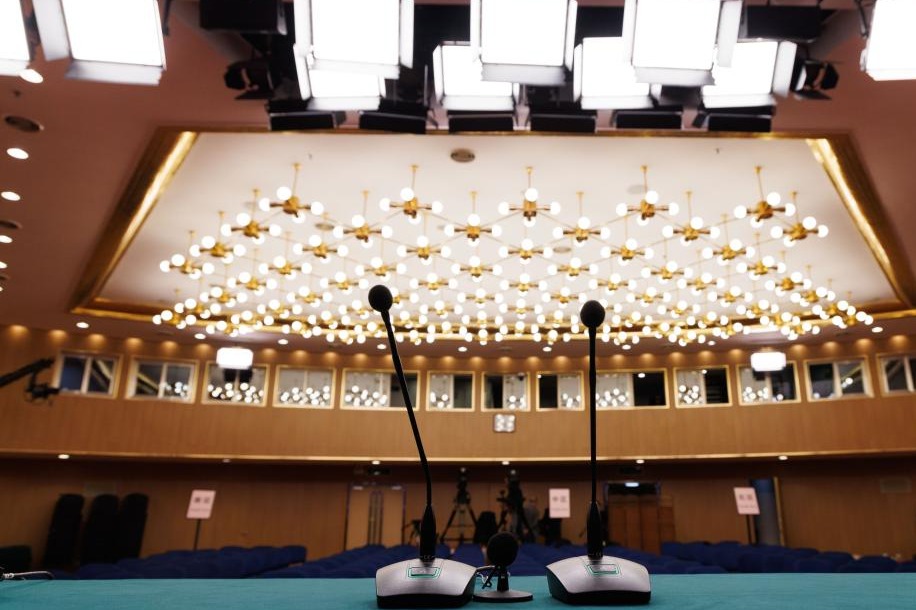
Beijing’s Media Center Hotel commenced operations as the official press headquarters for China’s forthcoming Two Sessions on Friday, February 28, 2026. The facility will support comprehensive media coverage of the nation’s most significant annual political gatherings, with registration figures exceeding 3,000 domestic and international journalists.
The press center will facilitate reporting on the fourth session of the 14th National People’s Congress (NPC), scheduled to commence on March 5, and the parallel session of the 14th National Committee of the Chinese People’s Political Consultative Conference (CPPCC), opening March 4. Official statistics indicate the NPC currently comprises nearly 3,000 deputies, while the CPPCC National Committee maintains over 2,100 members.
Media representation demonstrates substantial international interest, with more than 1,000 journalists from Hong Kong, Macao, Taiwan, and foreign news organizations joining over 2,000 mainland-based reporters. The press center has committed to operating with transparency while providing extensive logistical support and professional services to all accredited media personnel.
Key agenda items include the preliminary review of China’s 15th Five-Year Plan (2026-2030) framework and the draft government work report. This legislative session holds particular significance as it marks the inaugural year of the new five-year development cycle.
Three major press conferences will address critical policy areas: economic development, social welfare initiatives, and foreign affairs. Senior officials from relevant State Council departments will elaborate on policy directions and address matters of both domestic and international concern.
Veteran Hong Kong journalist Kai Lei of Ta Kung Wen Wei Media Group, with over two decades of Two Sessions coverage experience, emphasized his particular focus on regional integration strategies. ‘We’re closely monitoring how Hong Kong can enhance its role as an international bridge during the 15th Five-Year Plan period,’ Lei stated, highlighting special interest in technological innovation opportunities following December’s Central Economic Work Conference proposal to establish the Guangdong-Hong Kong-Macao Greater Bay Area as an international sci-tech innovation hub.