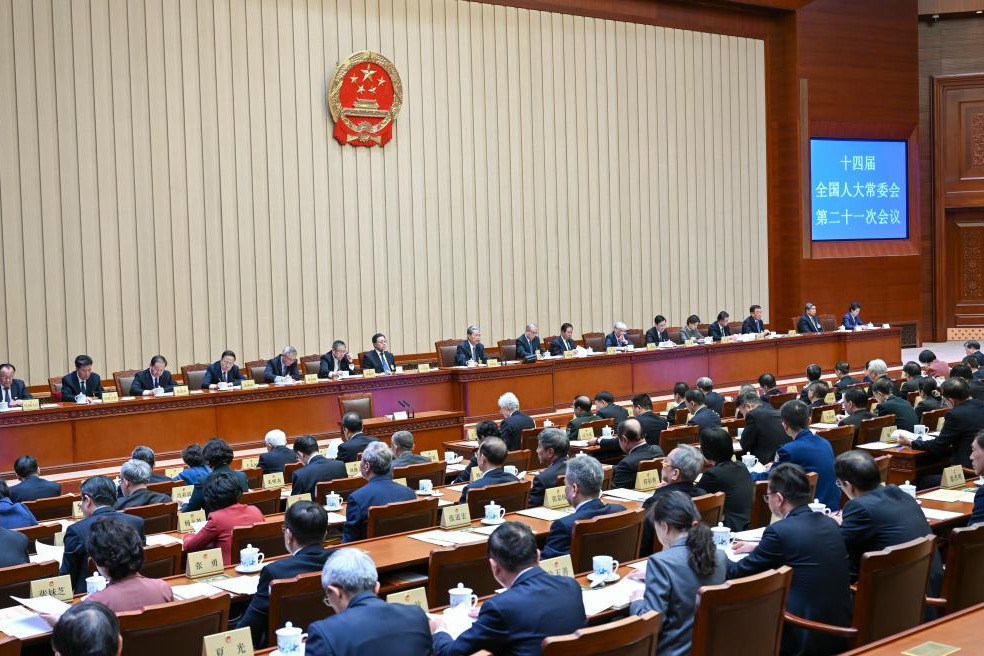
The 21st session of China’s 14th National People’s Congress (NPC) Standing Committee concluded in Beijing on February 26, 2026, marking significant legislative and personnel developments ahead of the upcoming annual parliamentary meeting. Presided over by NPC Standing Committee Chairman Zhao Leji, the closing session witnessed several critical decisions that will shape the country’s legislative agenda.
In a notable personnel change, lawmakers voted to remove Wang Xiangxi from his position as Minister of Emergency Management. The decision was subsequently formalized through a presidential order signed by President Xi Jinping. The session also addressed various organizational matters, including the approval of deputy qualification reports and additional personnel-related bills.
Legislators gave preliminary approval to the draft work report of the NPC Standing Committee, with the Council of Chairpersons recommending that Chairman Zhao Leji deliver this report during the forthcoming fourth session of the 14th NPC. The committee further adopted the draft agenda for the NPC session and proposed the composition of the session’s presidium and secretary-general, which will be submitted to the preparatory meeting for deliberation.
Addressing the assembly, Chairman Zhao emphasized the significance of the upcoming NPC session, which will review and approve China’s 15th Five-Year Plan (2026-2030) and deliberate on several crucial legislative documents. These include the draft environmental code, the draft law on promoting ethnic unity and progress, and the draft law on national development planning.
Zhao called upon committee members to maintain focus on the central priorities of the Party and the nation while executing their statutory responsibilities with heightened dedication. He stressed the importance of embracing suggestions from deputies and welcoming supervisory input to ensure the annual NPC session proceeds with efficiency and pragmatism.
The session concluded with Chairman Zhao presiding over a meeting of the Council of Chairpersons and a subsequent lecture for lawmakers, underscoring the educational component of the legislative process.