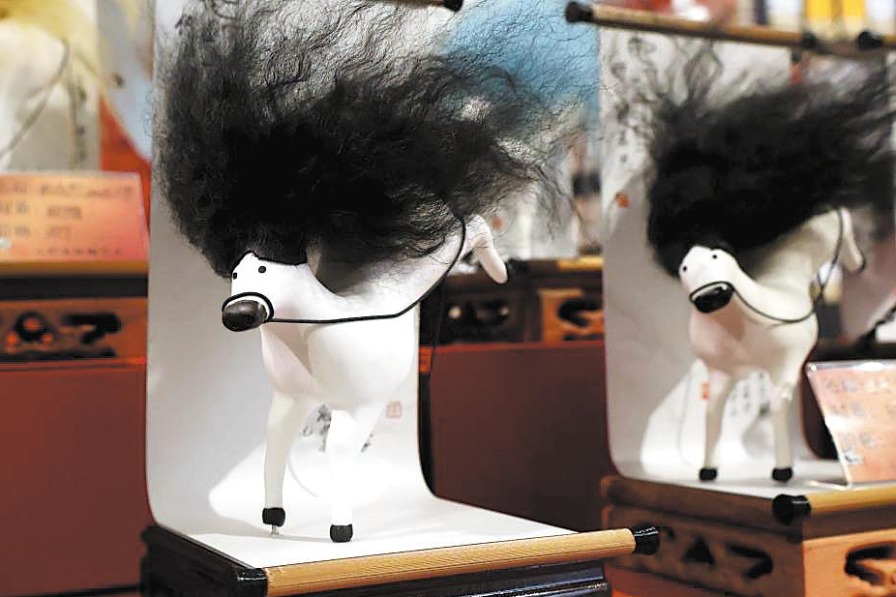
In an extraordinary fusion of classical artistry and contemporary design, Shandong Art Museum’s Mabiaobiao pony figurines have emerged as a cultural phenomenon across China. These meticulously handcrafted creations, whose name translates to “spirited little horse,” have captivated netizens and art enthusiasts alike, generating over 900,000 yuan ($130,546) in sales since their introduction.
The artistic journey began in September 2025 when Jinan-bordering Zibo’s Xiaoxiami polymer clay studio received a unique commission: to interpret over 200 paintings by legendary Chinese artist Qi Baishi (1864-1957) into three-dimensional forms. While Qi remains celebrated for his traditional shrimp and floral paintings, the studio’s team found particular inspiration in his dynamic, rarely featured equestrian artwork.
“Translating Qi’s free and lively artistic spirit into clay presented significant artistic challenges,” acknowledged Wang Zhi, the studio director. Specializing in realistic sculpture, Wang assembled a team of artists who spent months perfecting their technique to preserve the essence of Qi’s distinctive brushwork. The most complex aspect proved to be recreating the horse’s flowing mane, which ultimately led to the innovative use of natural sheep wool for its softness, durability, and styling versatility.
The breakthrough moment arrived when the first batch of completed ponies with their extravagant manes sparked spontaneous creativity within the studio. “We couldn’t resist braiding different hairstyles for them,” Wang recalled, unwittingly establishing the customizable feature that would become the product’s signature appeal.
Social media platforms including Xiaohongshu and Weibo rapidly amplified the phenomenon, with users sharing affectionate posts and styling suggestions. The museum embraced this collaborative relationship, incorporating netizen feedback on hair color, body tone, and volume into subsequent designs. Popular demand prompted new color variations in pink and blue, while early comments about thin manes inspired a fluffier redesign.
At the museum’s retail space, visitors meticulously examine each pony’s unique mane texture, curl pattern, and volume. “Each piece is distinctive—we can create pigtails or spiky hairstyles according to our preferences, essentially owning an exclusive companion,” remarked student Liu, who had just acquired one.
The figurines’ success stems from their unique positioning between artistic heritage and daily life. “Mabiaobiao carries the soaring energy of Qi’s horse, embodying the belief that ‘steady steps cover a thousand miles,’ while its authentic appearance brings lofty art into people’s daily experiences,” explained Cui Wentao, deputy director of Shandong Art Museum.
Each sculpture undergoes meticulous hand-shaping, baking, and finishing processes, with any imperfections necessitating complete restart. This painstaking craftsmanship results in limited availability, yet visitors patiently await the opportunity to acquire these unique artistic companions that successfully bridge centuries of Chinese cultural expression with modern creative consumption.