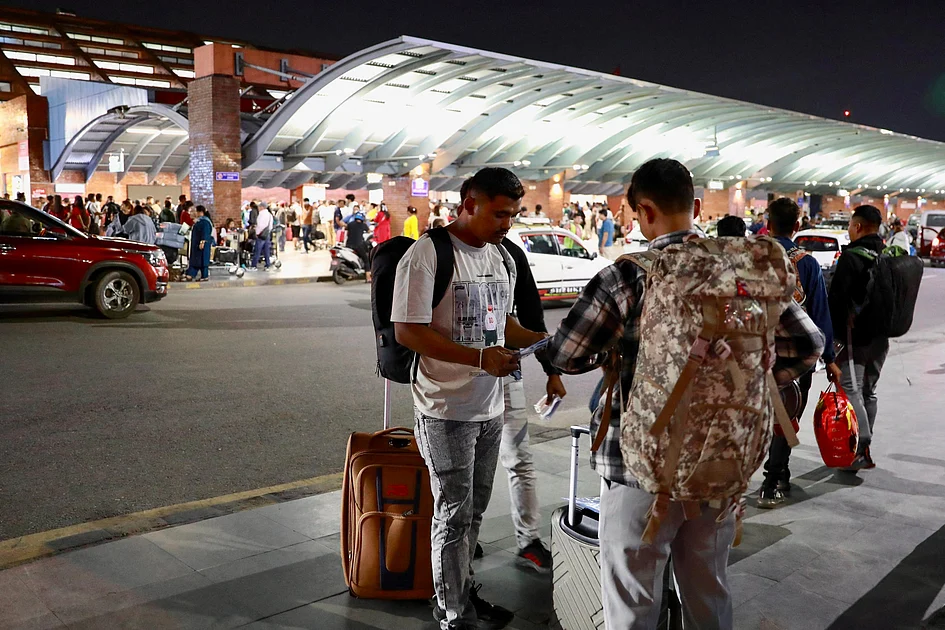
As Nepal prepares for its first parliamentary elections on March 5th following September’s youth-led uprising that toppled the government, a critical democratic paradox emerges: the nation’s 2.5 million overseas workers significantly influence electoral outcomes despite being systematically excluded from voting themselves. This Himalayan republic’s political landscape remains fundamentally shaped by migrant laborers who constitute 7.5% of the population and generate remittances equivalent to over one-third of GDP, yet cannot participate in the democratic process they financially sustain.
The September revolution, fueled by economic despair and vanishing opportunities, highlighted the growing influence of Nepal’s diaspora community. According to government statistics, these migrant workers—dispersed across Gulf nations, Saudi Arabia, India, and Malaysia—serve as primary breadwinners for their families back home. Political parties actively court this excluded constituency recognizing their powerful influence over domestic voting patterns through financial support and digital advocacy.
Ganesh Gurung of Nepal’s Policy Research Institute observes: ‘As the main economic providers, migrant workers wield substantial influence over family voting decisions. Their robust social media engagement consistently demonstrates profound frustration with successive governments.’ A recent survey by migrant rights organizations Shramik Sanjal and LAPSOJ revealed nearly 90% of overseas workers maintain strong interest in voting, with indirect participation through family recommendations and online campaign support becoming commonplace.
Despite clear democratic demand, systemic barriers persist. Legal challenges to a 2017 election ruling have stagnated, with no functional system for embassy voting, postal ballots, or electronic participation. The interim government installed after September’s uprising expressed support for electoral reform but failed to implement changes before the imminent elections. Election Commission spokesman Prakash Nyaupanem cited procedural limitations: ‘The system couldn’t be modified without legal foundation and comprehensive training—these elections were organized under extreme time constraints.’
Historical context reveals prolonged stagnation. The Supreme Court’s 2018 directive for reform produced no ‘significant development’ according to human rights lawyer Barun Ghimire. A drafted 2023 voting act collapsed due to budgetary constraints and electronic voting security concerns, as confirmed by an anonymous former Electoral Commission member.
The political influence of excluded migrants already manifests dramatically. The Rastriya Swatantra Party (RSP)—which made migrant voting rights a central platform—shocked establishment parties by becoming parliament’s fourth-largest force in 2022. That same year, Balendra Shah leveraged migrant support to win Kathmandu’s mayoral race and now stands as RSP’s prime ministerial candidate. National Network for Safe Migration representative Nilambar Badal confirms: ‘Shah secured victory primarily through pressure from overseas Nepalis who influenced Kathmandu voters.’
Shah told AFP he would address voting rights if elected, stating migrants ‘should get voting rights.’ Comparative international models demonstrate feasibility, with former chief election commissioner Neil Kantha Uprety noting: ‘With sufficient governmental and commission willingness, the election timeline could have been extended to include overseas Nepalis.’
Despite current exclusion, lawyer Ghimire remains optimistic: ‘Change appears inevitable. The mere existence of this debate represents progress.’ He envisions transformative democratic impact once inclusion occurs: ‘One million concentrated votes could reshape the political landscape and ensure genuine accountability from elected officials.’