Across the United States, the vibrant hue of Chinese red has transformed urban landscapes as Spring Festival celebrations extend far beyond traditional Chinatown boundaries. From February 16-17, more than fifteen iconic American landmarks participated in illumination ceremonies, including New York’s Empire State Building which marked its 26th consecutive year of glowing crimson to honor the Lunar New Year.
The cultural phenomenon has gained remarkable mainstream traction, with major institutions embracing the festivities. The Metropolitan Museum of Art hosted dragon dance performances and zodiac exhibitions while the National Museum of Asian Art in Washington DC held dedicated celebrations. The American Dream complex in New Jersey, the nation’s second-largest shopping center, transformed its iconic Ferris wheel red and organized family-friendly activities featuring traditional lantern displays and zodiac-themed decorations.
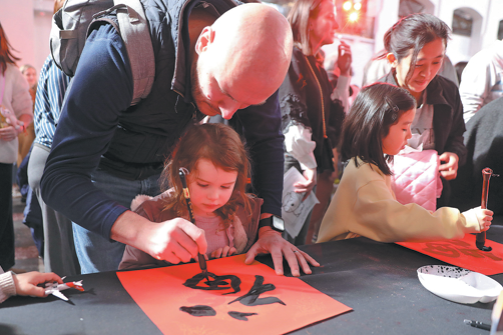
Chinese Consul General Chen Li in New York emphasized the festival’s significance, stating: ‘Spring Festival has served as an important bond uniting Chinese people for thousands of years. It has also become a powerful cultural symbol that bridges different civilizations and peoples.’ This cultural exchange was further demonstrated through collaborations like the China Institute of America’s partnership with the Shanghai Museum, which brought interactive cultural workshops to Lower Manhattan.
The commercial sector has enthusiastically adopted the celebration, with retailers launching zodiac-themed merchandise and promotional campaigns across social media platforms. Justin Ghermezian, vice-chairman of American Dream’s developer Triple Five Worldwide, noted: ‘Since we first opened our doors in 2019, celebrating Lunar New Year has been one of our proudest traditions. The horse symbolizes speed, momentum and limitless possibilities.’
New York resident Dona Hatcher reflected the growing cross-cultural appreciation: ‘I celebrate it every year the same way I celebrate other New Year holidays, with good wishes and happiness for myself and my friends.’ This sentiment echoes the observation of Tang Shifen from Shanghai Museum, who noted that the universal ‘sense of hope’ associated with spring’s arrival makes the festival relatable to people everywhere.