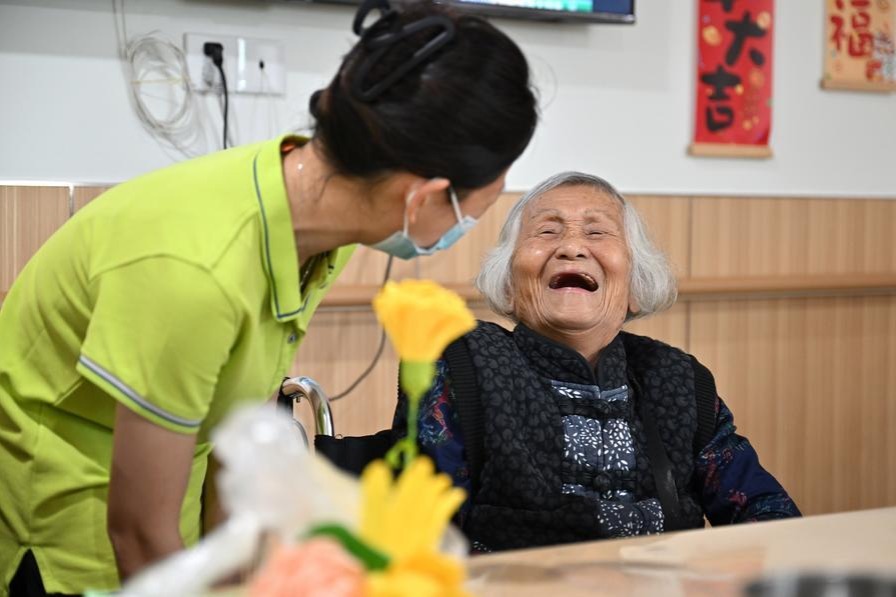
As China prepares for its annual ‘Two Sessions’ political gatherings in March, national political advisers are finalizing policy recommendations informed by extensive grassroots research. Jin Hua, a member of the Chinese People’s Political Consultative Conference (CPPCC) National Committee from Qinghai’s Haixi Mongol and Tibetan Autonomous Prefecture, has conducted thorough field investigations into elderly care challenges in high-altitude regions.
Her research at rural mutual-aid elderly care centers in Dulan county revealed that despite the construction of over 140,000 rural elderly care facilities during the 14th Five-Year Plan period (2021-2025), seniors in remote plateau areas require more specialized support. While increased state investment has provided adequate nursing beds for disabled elderly, institutions face low occupancy rates and staffing shortages due to harsh climatic conditions and traditional attitudes toward institutional care.
Jin emphasized the urgency of establishing village-level elderly care teams to ensure remote seniors receive assistance when needed. For the upcoming CPPCC session, she will propose guidelines for plateau medical-nursing institutions including critical emergency oxygen supply services.
The CPPCC National Committee’s preparatory work builds upon five years of systematic oversight conducted from 2021-2025. During this period, the committee executed continuous supervisory activities across ten key areas including business environment optimization, black soil conservation, development of the Guangdong-Hong Kong-Macao Greater Bay Area, elderly-friendly social transformation, veterans’ benefits, rural habitat improvement, and sports-education integration.
This oversight mechanism involved 47 grassroots inspection tours led by CPPCC vice-chairpersons with participation from 779 committee members, resulting in 48 specialized reports and 323 governmental recommendations that facilitated implementation of 25 laws and regulations.
Meanwhile, Clarence Ling Chun-kit, a CPPCC National Committee member from Hong Kong, has focused his research on youth development and enterprise expansion. Having conducted investigations at the Dagang Oilfield in Tianjin, Hainan Free Trade Port, and interregional economic exchanges, Ling plans to submit proposals addressing the integration challenges Hong Kong youth face in the Greater Bay Area, particularly regarding cultural adaptation and career development.
Ling emphasized that young people represent a vital force for national development and praised China’s consultative democracy system for ensuring the ‘scientific soundness and rigor’ of national policies. Approximately 2,100 CPPCC National Committee members will convene in Beijing in March, where the formulation of the 15th Five-Year Plan (2026-2030) will serve as a central focus of deliberations.