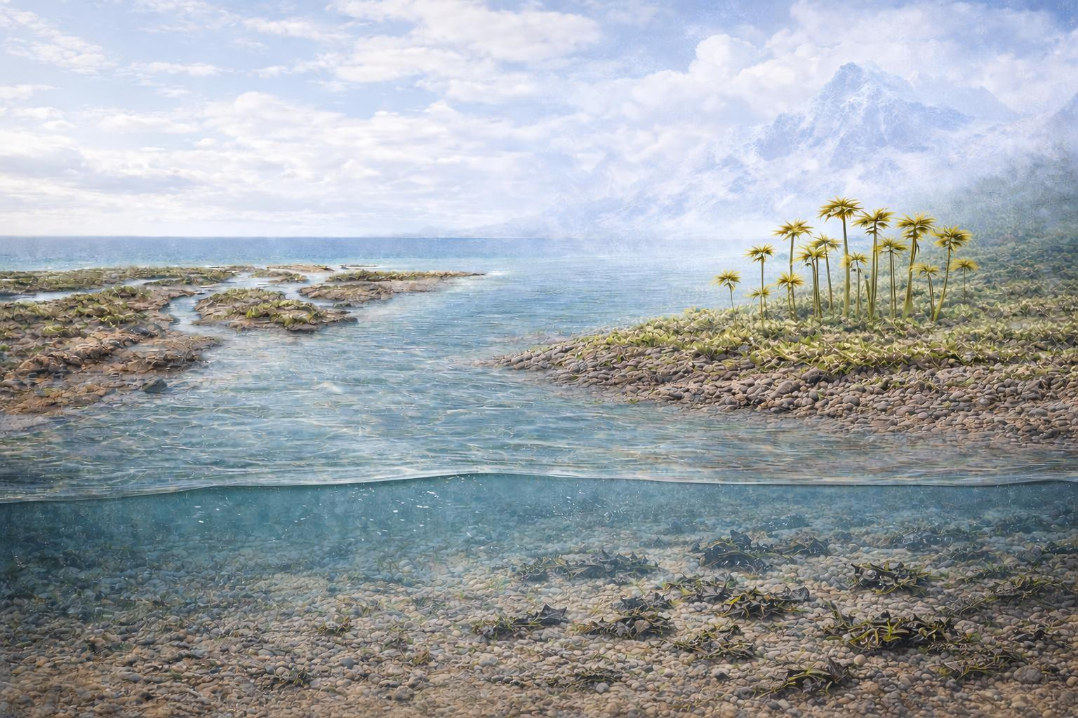
A groundbreaking international study has revealed that early terrestrial vegetation began fundamentally reshaping Earth’s planetary systems approximately 30 million years earlier than scientific consensus previously held. Published in Nature Ecology & Evolution, the research conducted by scientists from China, the United States, and the United Kingdom provides compelling new evidence that land plants emerged as environmental engineers during the Late Ordovician period around 455 million years ago.
The research team employed sophisticated analysis of marine sediment records, identifying a significant increase in carbon-to-phosphorus ratios that coincided with the proposed timeline of plant expansion. This geochemical signature indicates a substantial rise in terrestrial net primary productivity, fundamentally different from marine production systems due to its distinctive carbon-to-phosphorus composition.
According to Professor Zhao Mingyu, corresponding author from the Institute of Geology and Geophysics of the Chinese Academy of Sciences, these early plants triggered a cascade of environmental transformations. ‘Greater organic carbon burial would have promoted atmospheric oxygen accumulation while drawing down carbon dioxide levels,’ Zhao explained. These processes were further amplified by intensified silicate and phosphorus weathering linked to rapid plant diversification.
The study suggests that the Laurentian continent, part of modern North America, served as the initial epicenter for this botanical expansion. The environmental changes were so profound that they potentially contributed to Late Ordovician glaciation events and influenced mass extinction patterns. Following initial ecological disruption, the increased oxygenation eventually created conditions favorable for the evolution of primitive vertebrates, including early fish species.
This research fundamentally recalibrates our understanding of planetary evolution, demonstrating how terrestrial vegetation served as a primary driver in creating Earth’s habitable atmosphere and shaping the course of biological evolution millions of years earlier than previously documented.