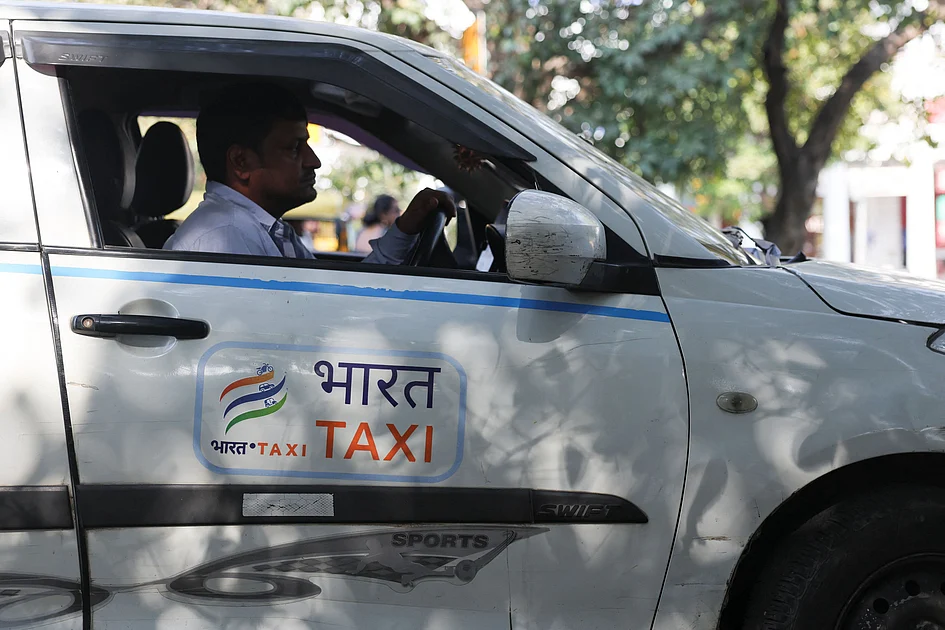
India has unveiled a groundbreaking government-supported ride-hailing platform that directly challenges international giants like Uber through an innovative cooperative business model. The service, named Bharat Taxi, represents a significant shift in the country’s mobility ecosystem by eliminating driver commissions and offering profit-sharing opportunities to participating drivers.
Amit Shah, India’s Minister of Cooperation and Home Minister, announced the initiative during a Monday address to drivers, explaining that for a nominal investment of 500 rupees (approximately $5.50), drivers can become shareholders and receive profit distributions after three years of operation. “The fundamental objective of this taxi service is not to function as a conventional profit-driven corporation,” Shah emphasized during the launch event.
The government-backed venture emerges amid widespread dissatisfaction among drivers working for established platforms such as Uber and its domestic competitor Ola. Primary grievances include excessive commission structures, inadequate fare rates, and overall financial pressures on drivers. Shah previously informed Parliament that unlike existing services, Bharat Taxi’s profits “will not be channeled to corporate tycoons.”
While Uber maintains dominance alongside Ola and Rapido in India’s rapidly expanding $2 billion ride-hailing market—projected by Grand View Research to reach $11 billion by 2033—Bharat Taxi has already attracted over 250,000 drivers. Currently operational in select regions including New Delhi, the service plans nationwide expansion within two years.
The platform offers comprehensive mobility options through its mobile application, enabling customers to book traditional cabs, three-wheeled autorickshaws, and motorcycle taxis. Additionally, Bharat Taxi provides financial services including vehicle mortgage assistance and loan facilitation for drivers.
Uber responded to the development by acknowledging India’s “dynamic and rapidly evolving mobility ecosystem,” stating that “healthy competition ultimately benefits all stakeholders” while asserting its continued preference among both drivers and riders. Ola declined to comment on the new competitor.
This marks the first federal government-backed challenge to established ride-hailing services in India, distinguishing itself from previous private sector attempts like BluSmart that failed to significantly disrupt market dominance.